Machine Vision Knowledge Base: Lens Selection and Application Guides
Knowledge
Machine Vision Inspection Application Cases: Complete Index
Index of POMEAS machine vision application cases by industry: fiber optics, electronics and semiconductors, medical parts, and multi-product integration
Machine Vision Optics Selection Guides: Complete Index
Index of every POMEAS selection guide: telecentric, zoom and FA lenses, sensor matching, lighting choice and depth of field
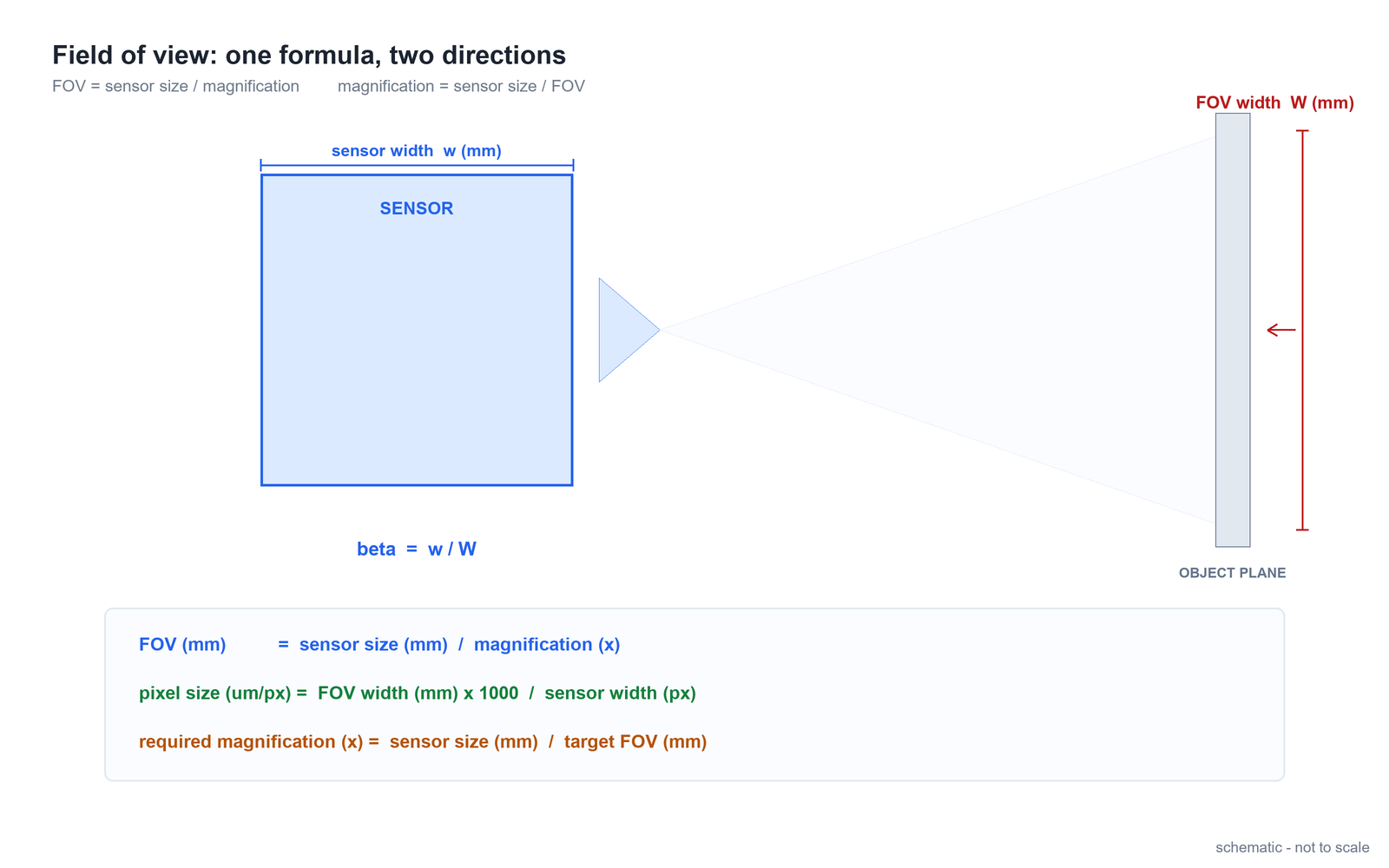
FOV Calculator: Field of View and Pixel Size from Sensor
Interactive FOV and pixel-size calculator from sensor size, magnification and resolution, plus a working-distance mode, the three formulas behind it and worked examples.
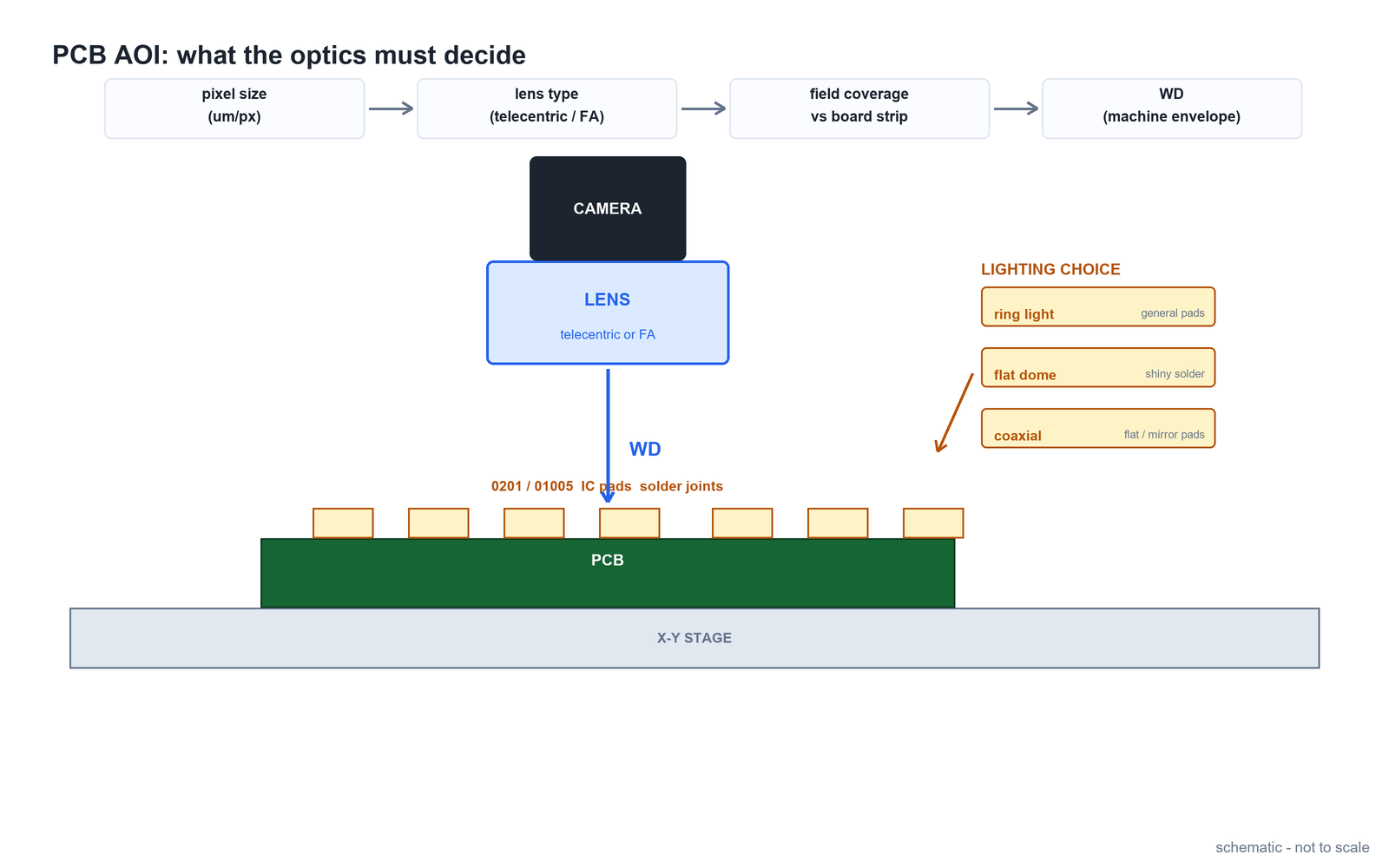
PCB AOI Optics: Pixel Size, Lens Type, Working Distance
A four-step optical selection for PCB AOI: pixel size from the smallest feature, lens type against height variation, working distance as machine budget
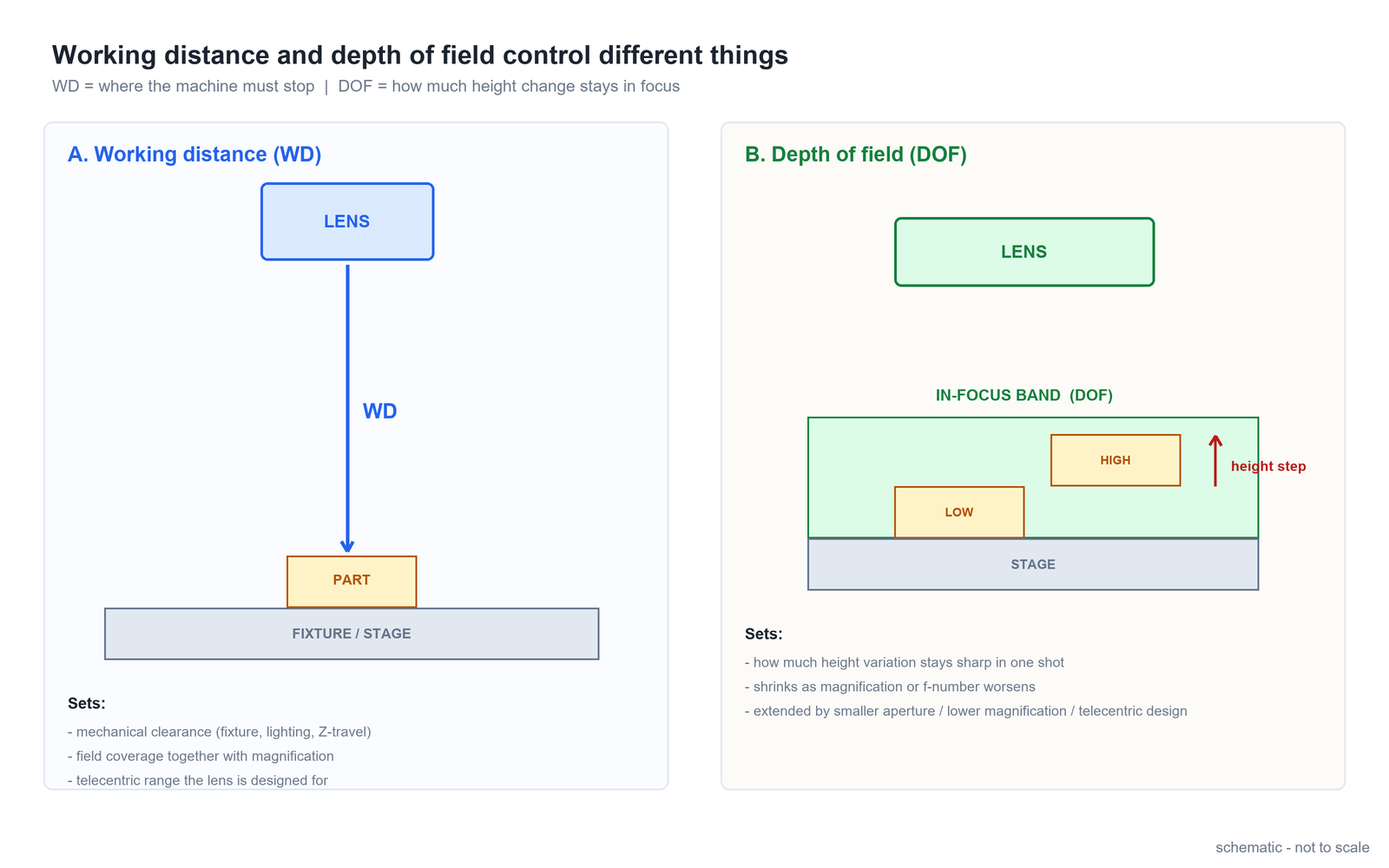
Working Distance vs Depth of Field in Machine Vision
Working distance decides where the lens sits; depth of field decides how much the part may move.
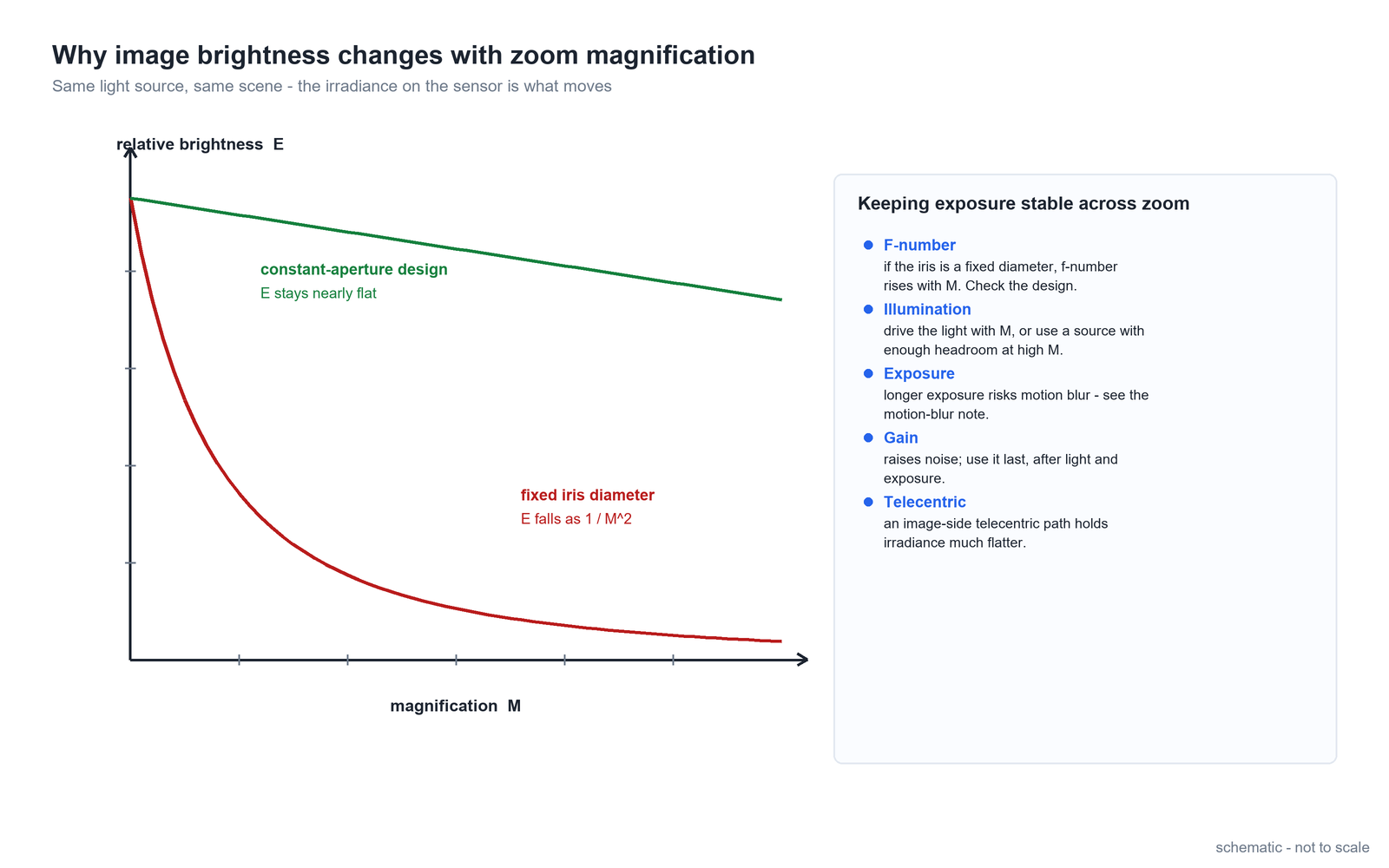
Why Image Brightness Changes with Zoom Magnification
Image brightness falls as zoom magnification rises - geometry plus f-number. How to compensate in a fixed order: light first, exposure second, gain last.
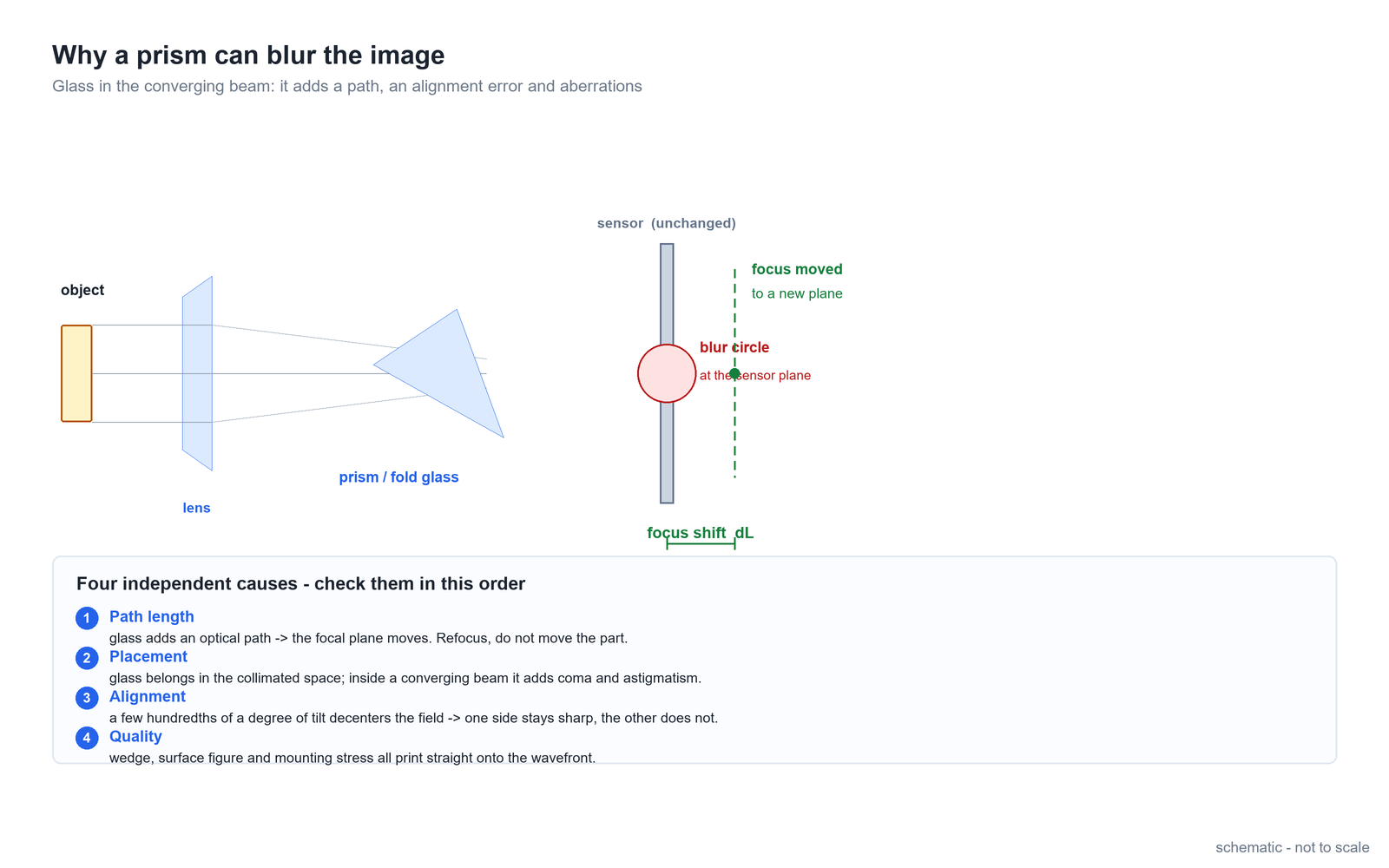
Why a Lens Turns Blurry After Adding a Prism: 4 Causes
Adding a prism can defocus a machine vision lens. Four independent causes - optical path length, beam placement, alignment and glass quality - and the order to check them.
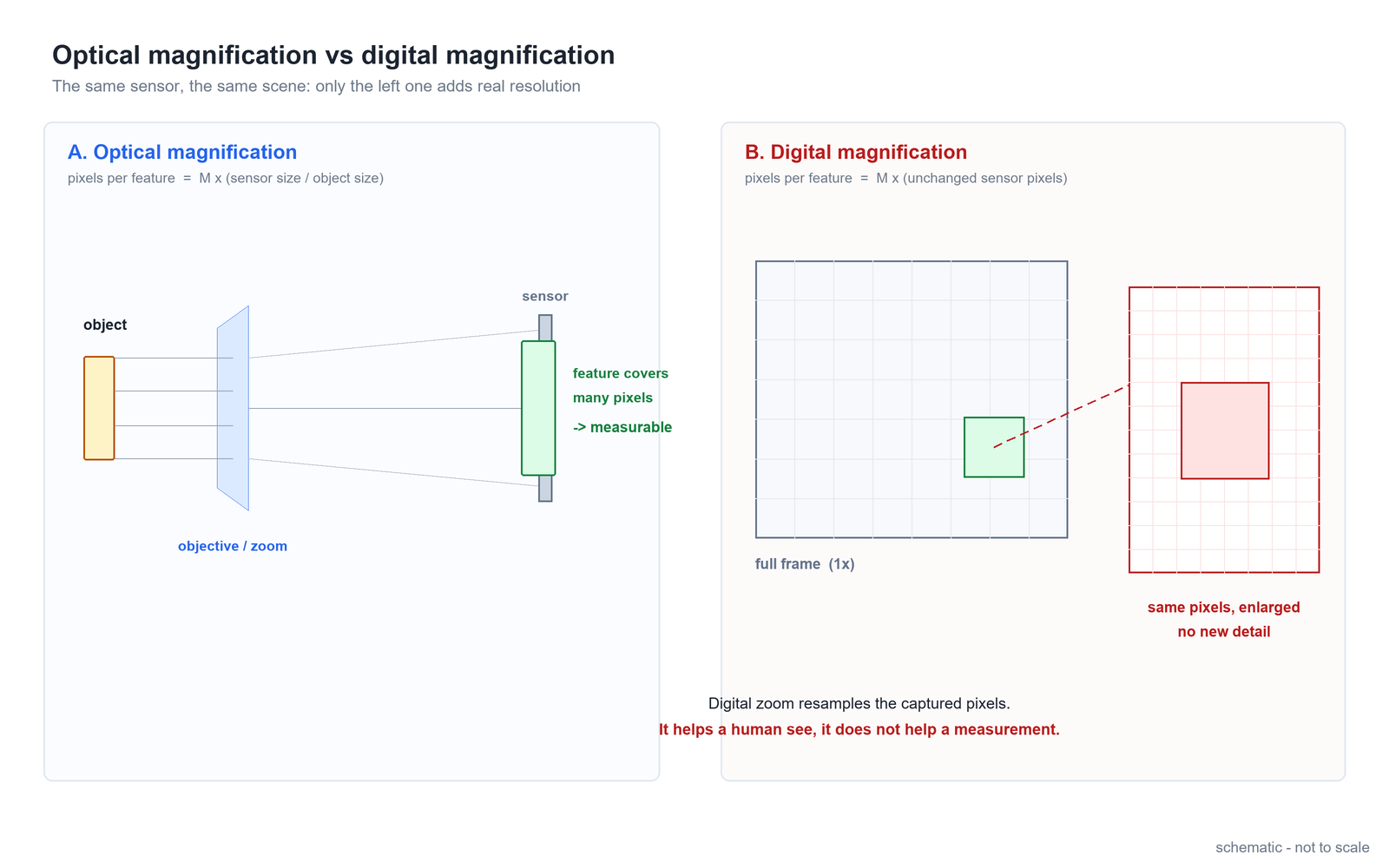
Optical Magnification vs Digital Magnification in Machine
Optical magnification puts more pixels on the feature; digital magnification only resamples captured pixels.
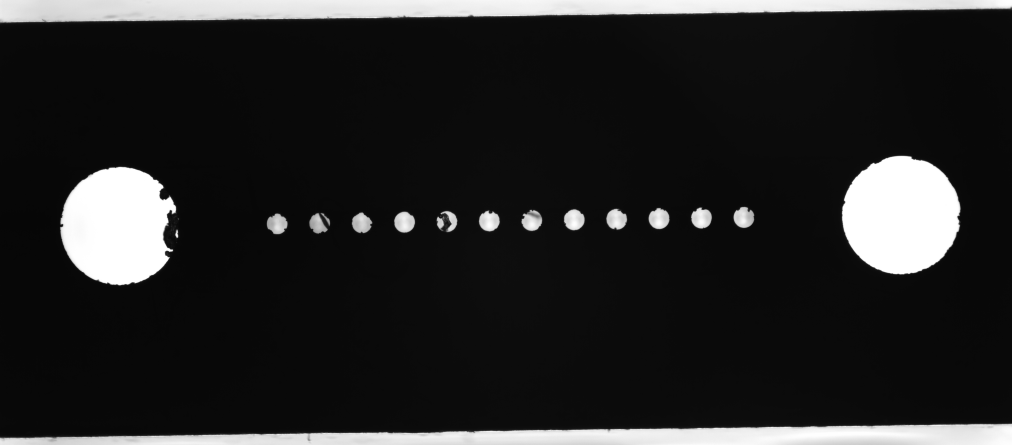
Ferrule Bore Inspection: Diameter, Concentricity, Defects
What a ferrule bore inspection must deliver (diameter, ovality, rim condition, contamination, center and concentricity), how many pixels a bore needs, and why parallel backlight is the working choice for bore geometry. Worked examples from a 126 um ceramic ferrule and a documented 0.025 mm multi-core plastic ferrule, with real backlight images.

Subscribe to Our Newsletter
Simply enter your email to receive the latest news and insights from Pomeas. Stay connected with Pomeas and be the first to discover new innovations in optical excellence.