Machine Vision Knowledge Base
Knowledge
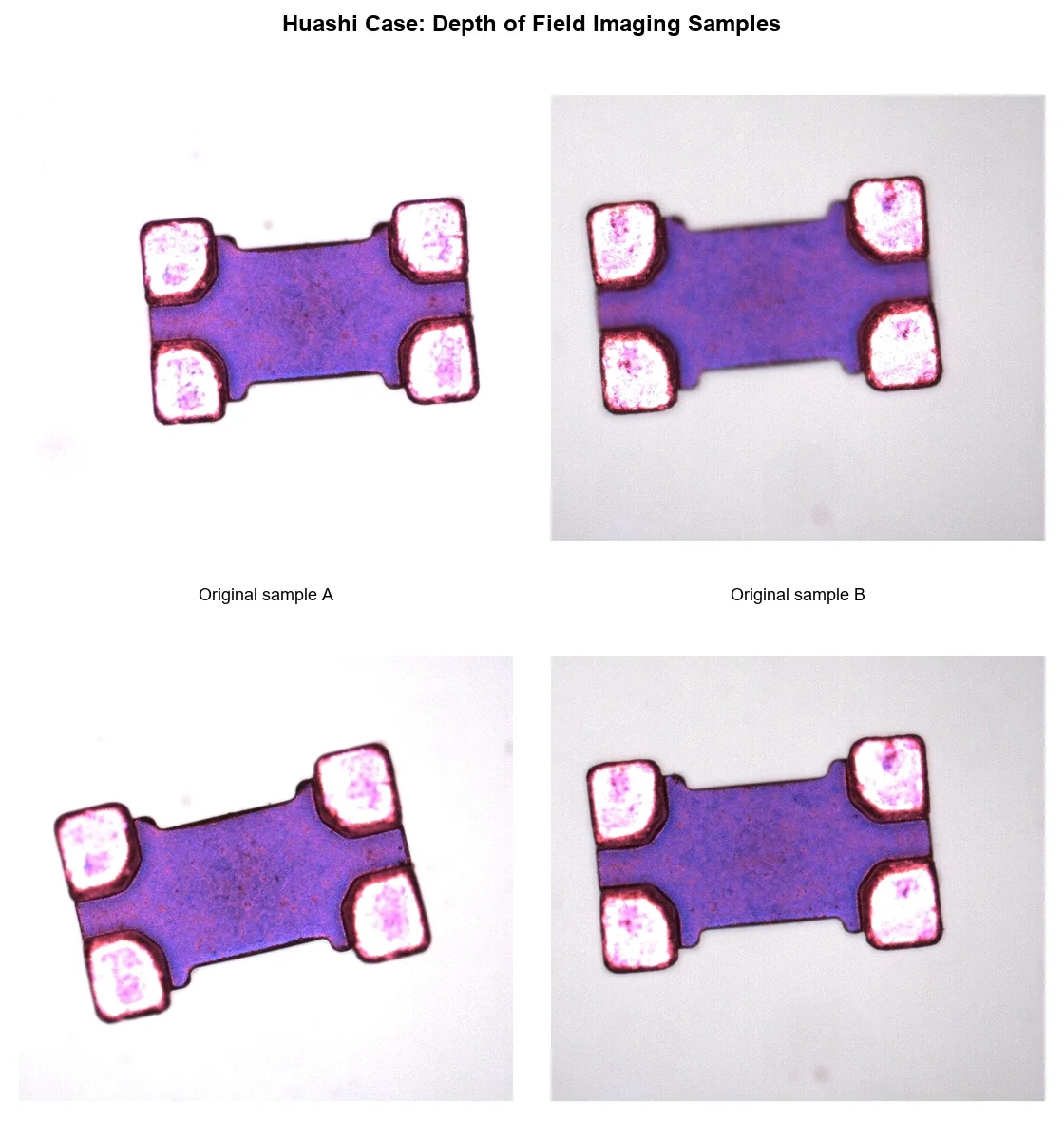
How to Improve Depth of Field in Industrial Zoom Lenses | POMEAS
Learn how aperture, magnification, TV adapters and auxiliary lenses affect depth of field in industrial zoom lenses, with a real customer imaging case.
What Is Detent Magnification? Detented vs Continuous Zoom Lenses
Detent magnification explained: how mechanical detent positions work on a zoom lens, how detented, continuous and motorized zoom differ, and what detents do not guarantee.
How to Choose a Zoom Lens + APO Objective: 5-Step Checklist
Select a zoom lens + APO objective in 5 steps: set NA from feature size, size FOV, match the TV tube, check low-mag vignetting, request verified data.
Motorized Zoom + APO for Semiconductor Wafer Inspection
Motorized zoom plus APO objectives for semiconductor and wafer inspection: a 12.5X body with a 10x APO gives a computed 5.8x-75x, 1 um range.
Matching Camera Sensor to Zoom Lens Image Circle: 1/3–1 Inch
Camera sensor to zoom lens image circle matching: 1x, 1.5x, 2x tube rules, why 1/3-inch sensors never flag vignetting, and the 72.5% field limit.
Zoom Lens Total Magnification & FOV Calculator: Worked Examples (2X–50X)
Calculate total magnification and field of view for zoom lens + APO objective setups. Worked examples from 1.4X to 75X, FOV down to 0.12 mm.
APO vs Plan Achromatic vs Achromatic Objectives: Which Does Your Inspection Need?
APO vs plan achromatic vs achromatic objectives: what each correction class fixes, MPO NA 0.055-0.42 and WD 20.5-45 mm, plus a resolution reverse lookup.
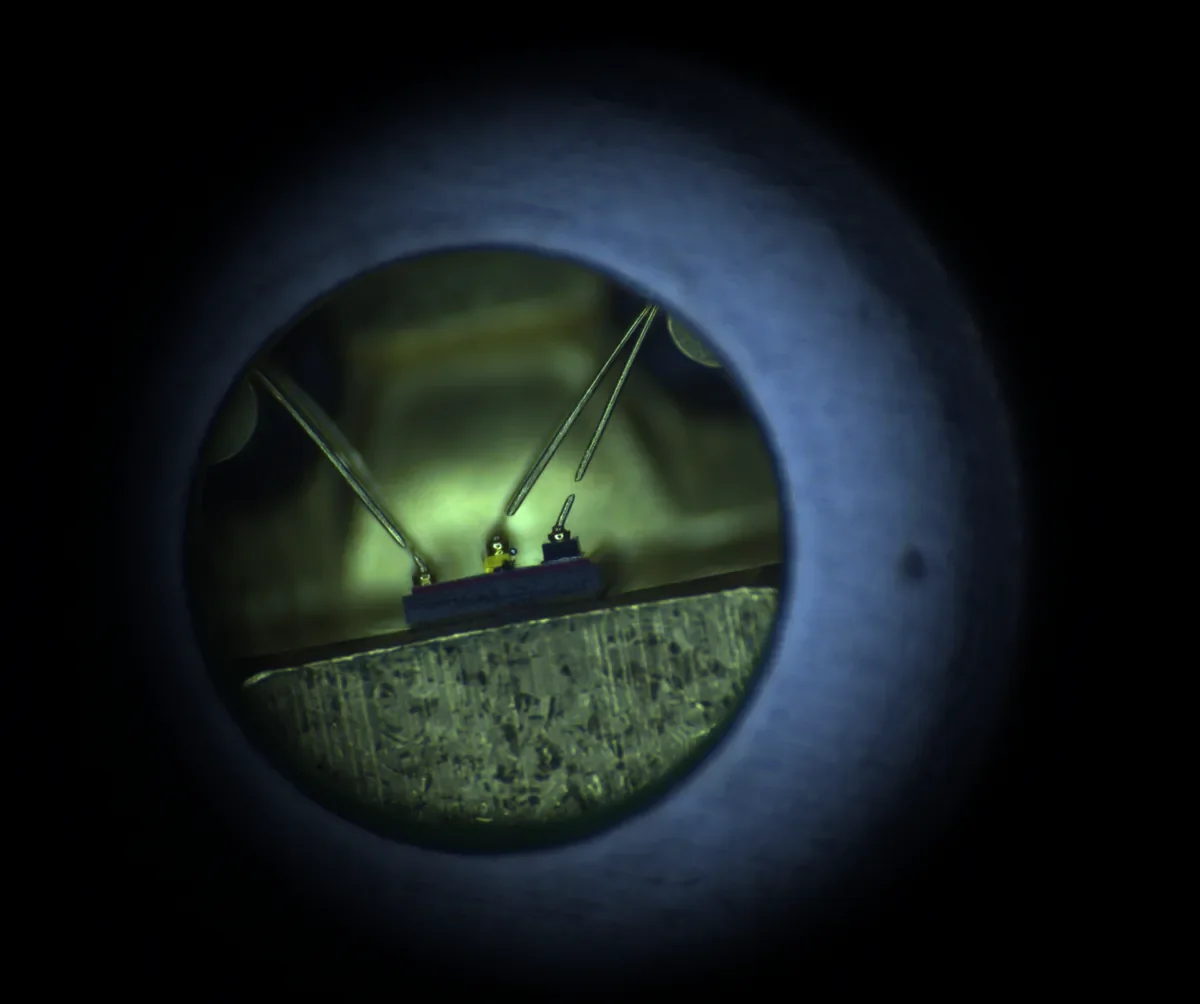
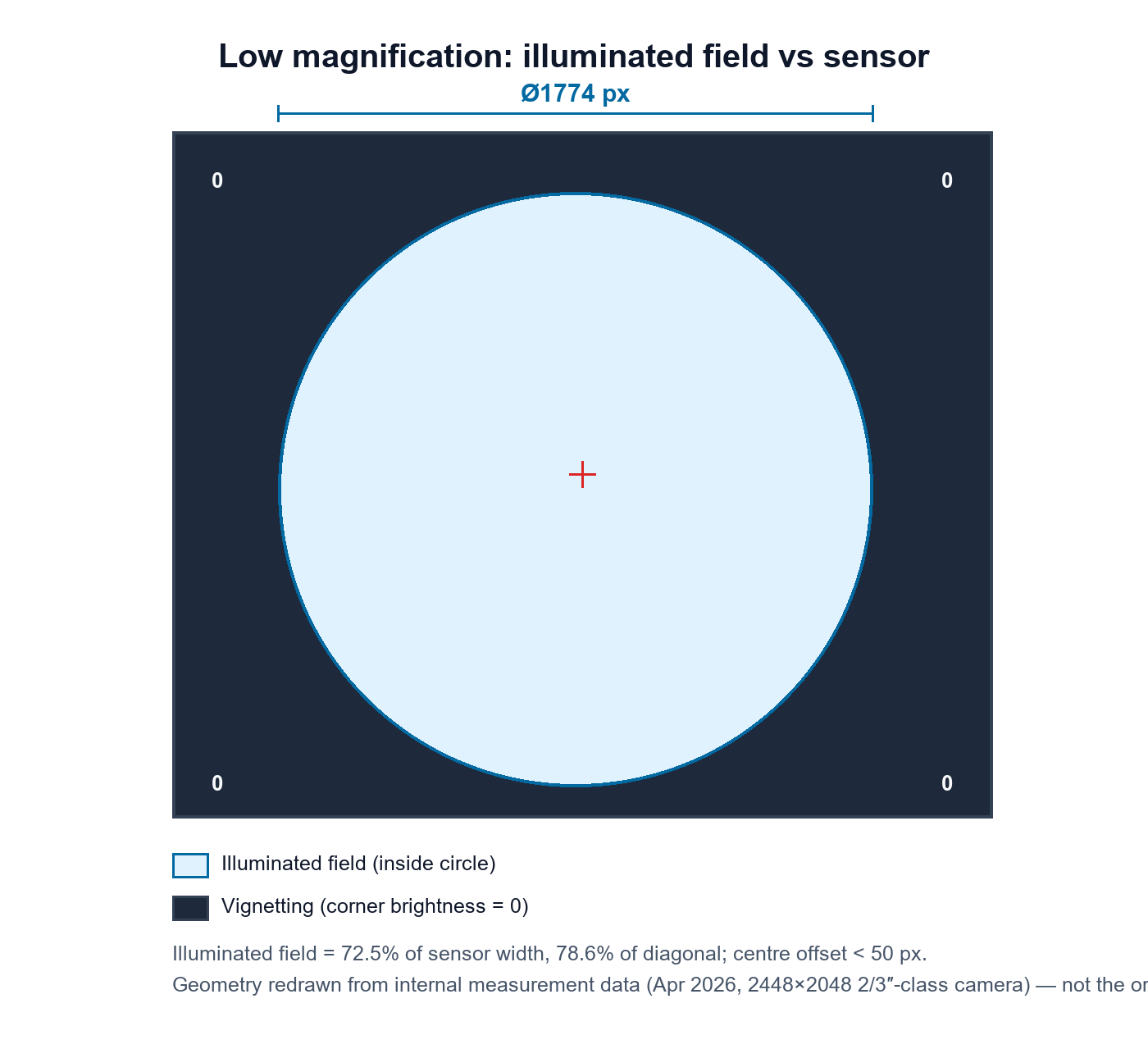
Why Do Corners Go Dark at Low Magnification? Vignetting in Zoom Lens Systems Explained
Why do corners go dark at low magnification? Vignetting in zoom lens systems explained: the field measured just 72.5% of the sensor width, corners at 0.
Zoom Lens with APO Objectives: Magnification, Vignetting and Industrial Applications
How a zoom lens works with 2X-50X APO objectives: total magnification and FOV calculations, why vignetting appears at the low-magnification end, and how to choose a combination for semiconductor, PCB and precision inspection.

Subscribe to Our Newsletter
Simply enter your email to receive the latest news and insights from Pomeas. Stay connected with Pomeas and be the first to discover new innovations in optical excellence.