Porduct Details
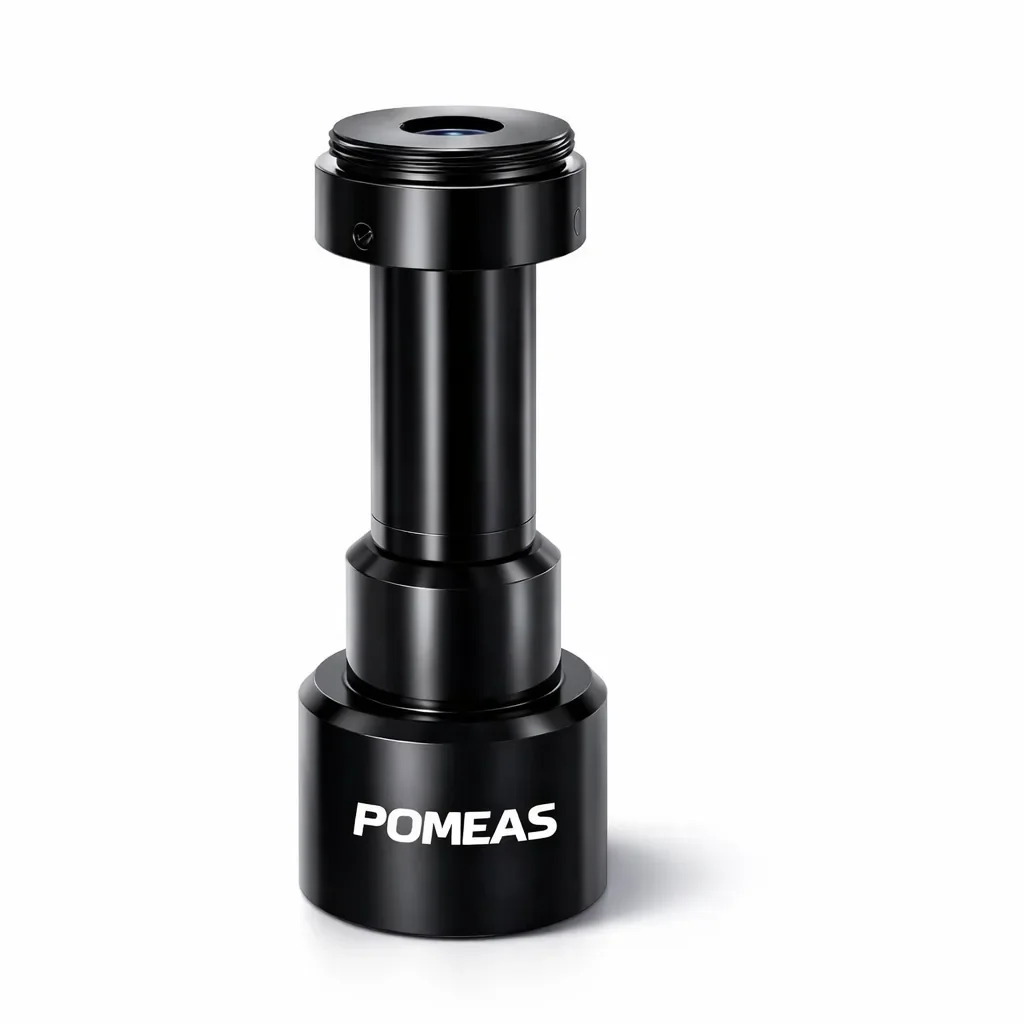
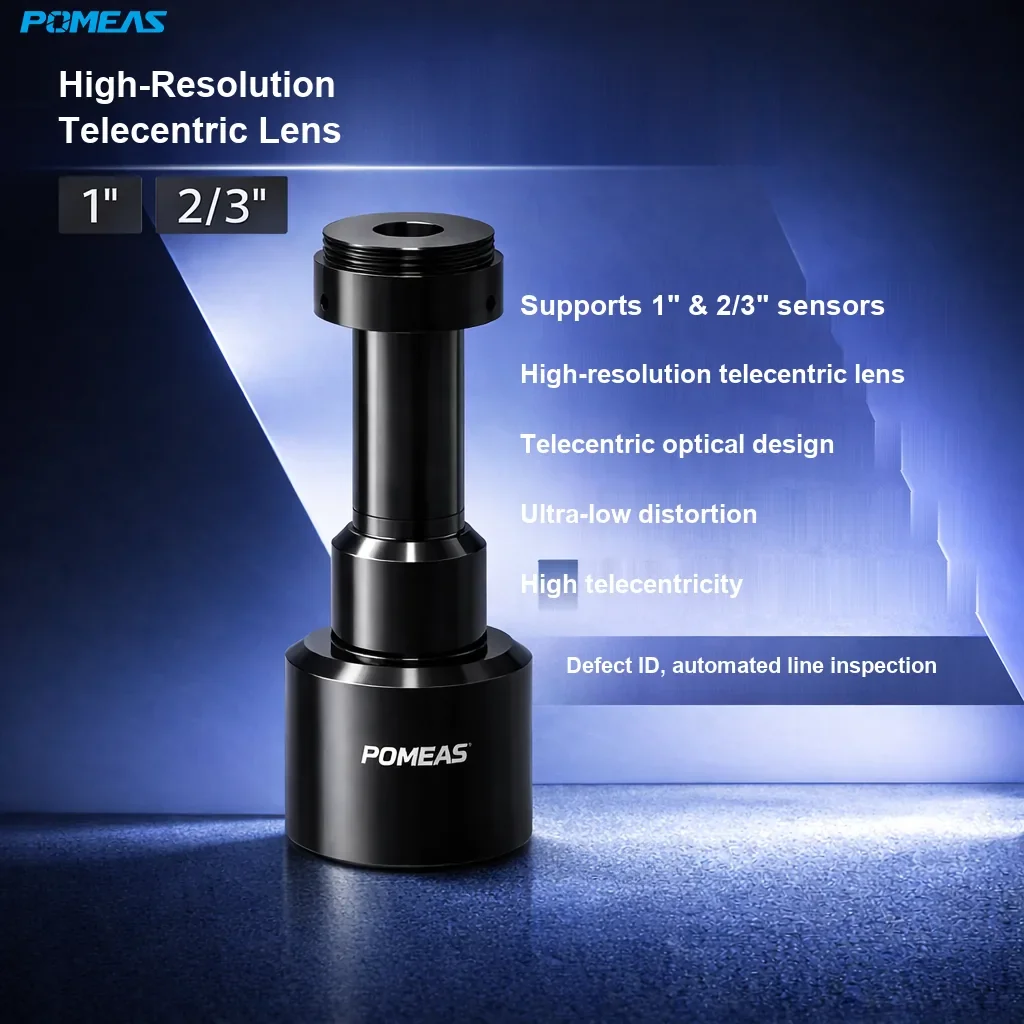
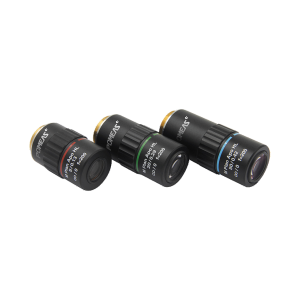
0.5X High-Resolution Telecentric Lens, 110mm WD
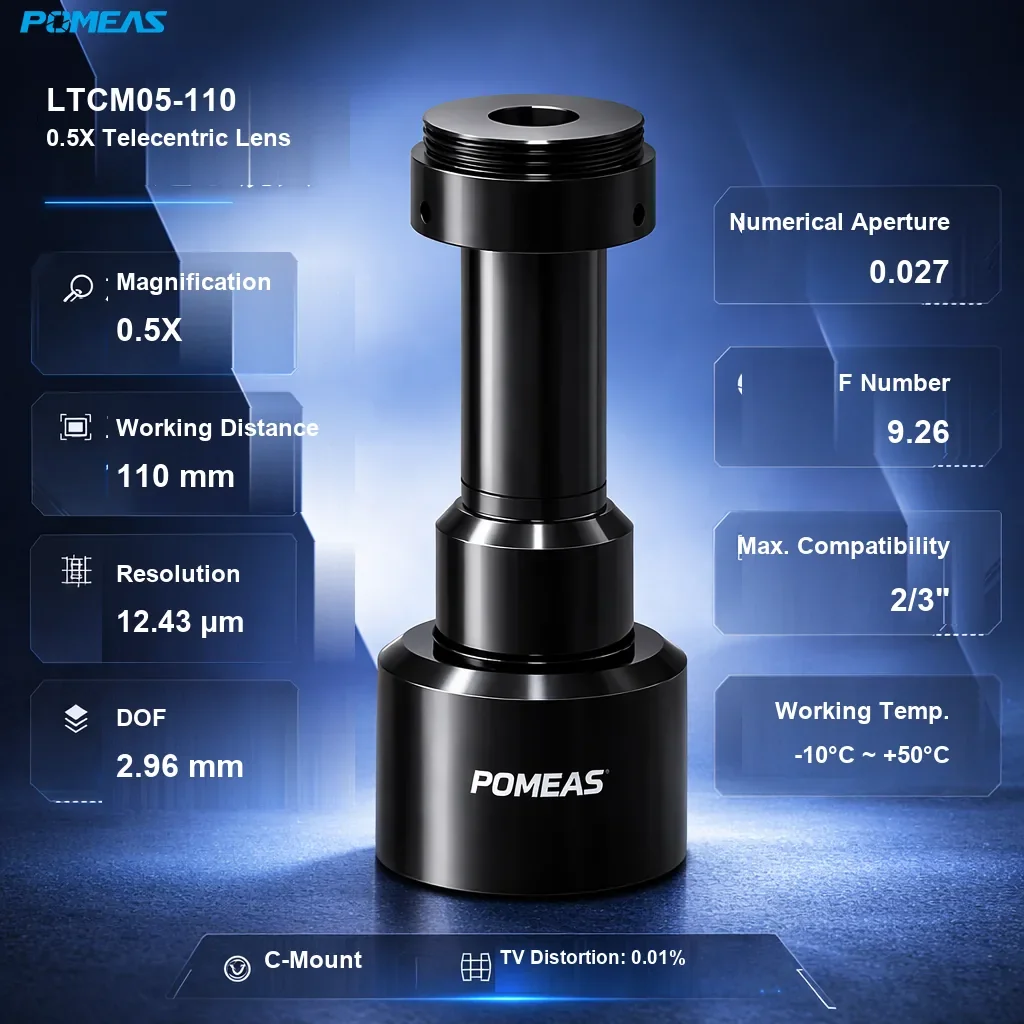
POMEAS PMS-LTCM05-110: 0.5X telecentric lens, 110 mm WD, 12.43 um object-side resolution, 0.01% TV distortion, C-mount, for 2/3-inch sensors.
SKU:
Product Overview
The PMS-LTCM05-110 from POMEAS is a telecentric lens for high-precision dimensional measurement and visual inspection. With a TV distortion of only 0.01% and a resolution of 12.43 μm, it keeps magnification constant across the field of view, so dimensions can be measured directly on the image without perspective error. C-Mount mount, sensors up to 2/3".
Key Features
- Telecentric design with TV distortion of only 0.01% for metrology-grade image geometry.
- 12.43 μm object-side resolution for fine-detail inspection.
- Constant magnification over the depth of field: no size shift when the part moves.
- NA 0.027 and F-number 9.26 balance light collection and depth of field.
- Standard C-Mount mount, integrates with common industrial cameras.
- Supported sensors: 2/3". Customization available on request.
Specifications
| Model | PMS-LTCM05-110 |
|---|---|
| Magnification | 0.5X |
| Working Distance | 110mm |
| Resolution | 12.43μm |
| Depth of Field | 2.96mm |
| NA (Numerical Aperture) | 0.027 |
| F Number | 9.26 |
| TV Distortion | 0.01% |
| Max. Sensor Size | 2/3″ |
| Mount | C-Mount |
| Working Temp. | -10°C~+50°C |
Typical Applications
Dimensional measurement of machined and molded parts, electronics and connector inspection, glass and sheet-edge inspection, in-line quality control wherever telecentric geometry and stable magnification are required.
Selection Guide
To choose the right model, first compare the smallest feature to inspect with the lens resolution and the camera pixel size; then confirm the working distance available in the machine and the maximum supported sensor size. POMEAS can customize working distance, mount and magnification for your application.
Field of View at 0.5X: What Fits on the Sensor
Direct answer: field of view is the camera sensor’s active area divided by magnification, so at 0.5X it is exactly twice the sensor size. On the maximum supported 2/3" sensor (8.8 × 6.6 mm active area) this lens images 17.6 × 13.2 mm; a 1/2" sensor images 12.8 × 9.6 mm. The two dimensions that decide the field are fixed — 0.5X magnification and a 110 mm working distance — so to change the field of view you change the camera, not the lens.
| Sensor format | Active area (mm) | Field of view at 0.5X (mm) |
|---|---|---|
| 2/3" (max. supported) | 8.8 × 6.6 | 17.6 × 13.2 |
| 1/1.8" | 7.2 × 5.4 | 14.4 × 10.8 |
| 1/2" | 6.4 × 4.8 | 12.8 × 9.6 |
| 1/3" | 4.8 × 3.6 | 9.6 × 7.2 |
Active areas are standard catalogue values and the fields are derived (sensor dimension ÷ 0.5), so confirm them against your camera datasheet before fixing fixture and part-handling sizes.
Resolution sets the other limit. Object-side resolution is published as 12.43 μm, and at 0.5X one camera pixel covers twice its pitch: 6.9 μm/px with 3.45 μm pixels (derived). The lens therefore resolves detail about 1.8 pixels wide, which means the optics rather than the pixel grid define the smallest measurable feature — a camera with a pixel pitch of roughly 6 μm or less is what this lens can actually use at 0.5X.
Distortion is why dimensions can be read straight off the image. TV distortion is published at 0.01%; across a 17.6 mm field that is about 1.8 μm of geometric error (derived), an order of magnitude below the 12.43 μm resolution, so lens geometry does not set the accuracy budget at this magnification. What remains in a real station comes from calibration, illumination and edge definition rather than from the lens.
For shiny parts there is a variant of the same optical formula: the PMS-LTCM05-110C keeps the 0.5X magnification, 110 mm working distance, 12.43 μm resolution and 0.01% TV distortion, but adds a built-in coaxial beam-splitter path for collimated on-axis illumination — the configuration used for polished metal, wafers and glass, where ring lighting produces glare and unstable edges. For matte or back-lit parts this standard version is the simpler choice.
Frequently Asked Questions
What is a telecentric lens and when should I use one?
A telecentric lens keeps magnification constant over its depth of field, so the part size does not change with position or height. Use it whenever dimensions are measured directly from the image: connector pins, machined features, stamped parts and glass edges.
Which sensors does this model support?
This model supports sensors up to 2/3". Verify the mount and sensor size of your camera before final selection.
How much distortion does it introduce?
The TV distortion of this model is 0.01%, keeping image geometry stable from center to edge — a key requirement when dimensions are calculated directly from image coordinates.
Can the working distance or mount be customized?
Yes. POMEAS offers customization of working distance, mount and magnification; send your part and camera specifications so the technical team can confirm the solution.
What field of view does this lens give on a 2/3-inch sensor?
Field of view is the sensor active area divided by magnification, so at 0.5X it is twice the active area. On the maximum supported 2/3 inch sensor (8.8 x 6.6 mm) the field is 17.6 x 13.2 mm; on a 1/2 inch sensor it is 12.8 x 9.6 mm. These values are derived — confirm them against your camera datasheet.
Should I choose the coaxial version for shiny parts?
Yes. The PMS-LTCM05-110C shares the 0.5X magnification, 110 mm working distance, 12.43 um resolution and 0.01% TV distortion of this model, but adds a built-in coaxial beam-splitter path for collimated on-axis illumination. Use it for polished metal, wafers and glass, where ring or oblique lighting produces glare and unstable edges.
Related Reading
- What Is a Telecentric Lens? Working Principle, Types and When to Use One
- Telecentric Lens vs Standard FA Lens: Distortion, Accuracy and Cost
- Object-Side Resolution vs Measurement Accuracy
- POMEAS Machine Vision Knowledge Base
Related Products

Subscribe to Our Newsletter
Simply enter your email to receive the latest news and insights from Pomeas. Stay connected with Pomeas and be the first to discover new innovations in optical excellence.



0 Files