Porduct Details
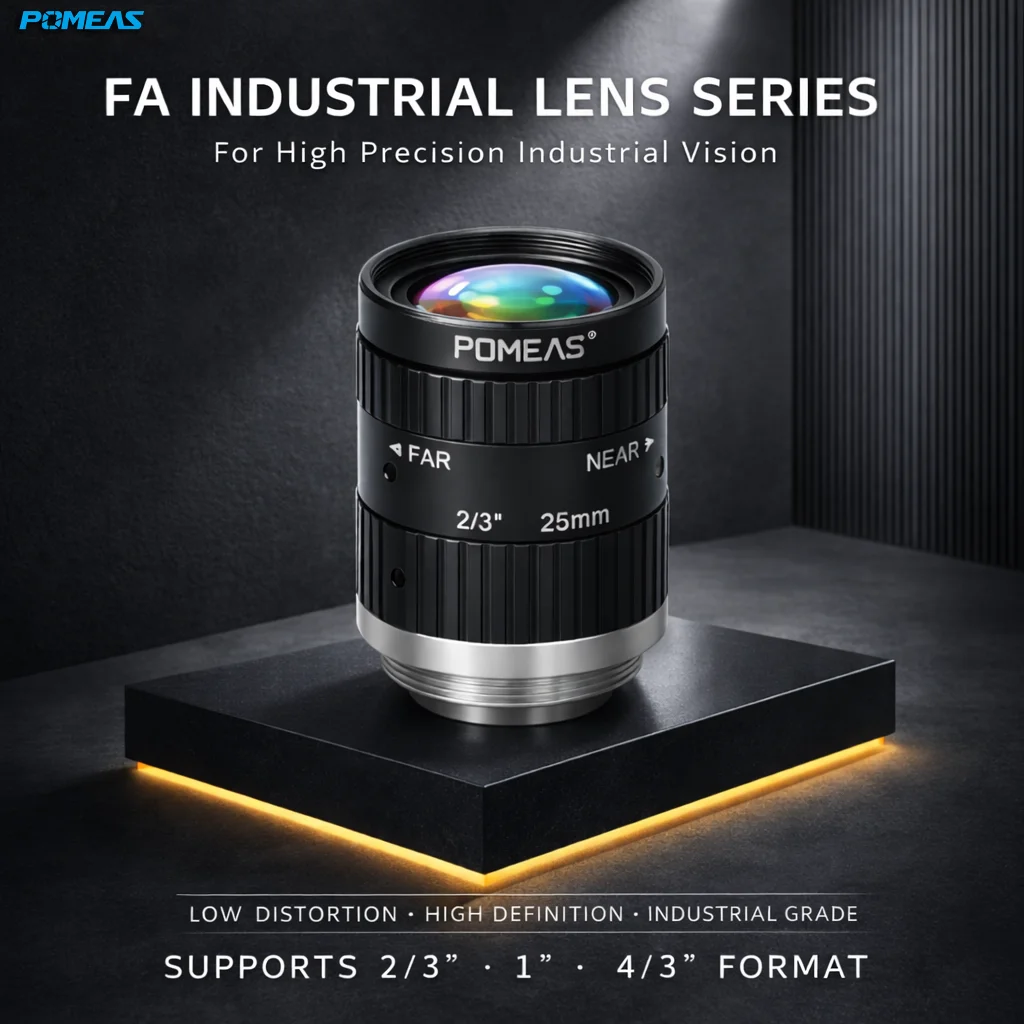
25mm 2/3-Inch 10MP VIS-NIR C-Mount Lens | POMEAS
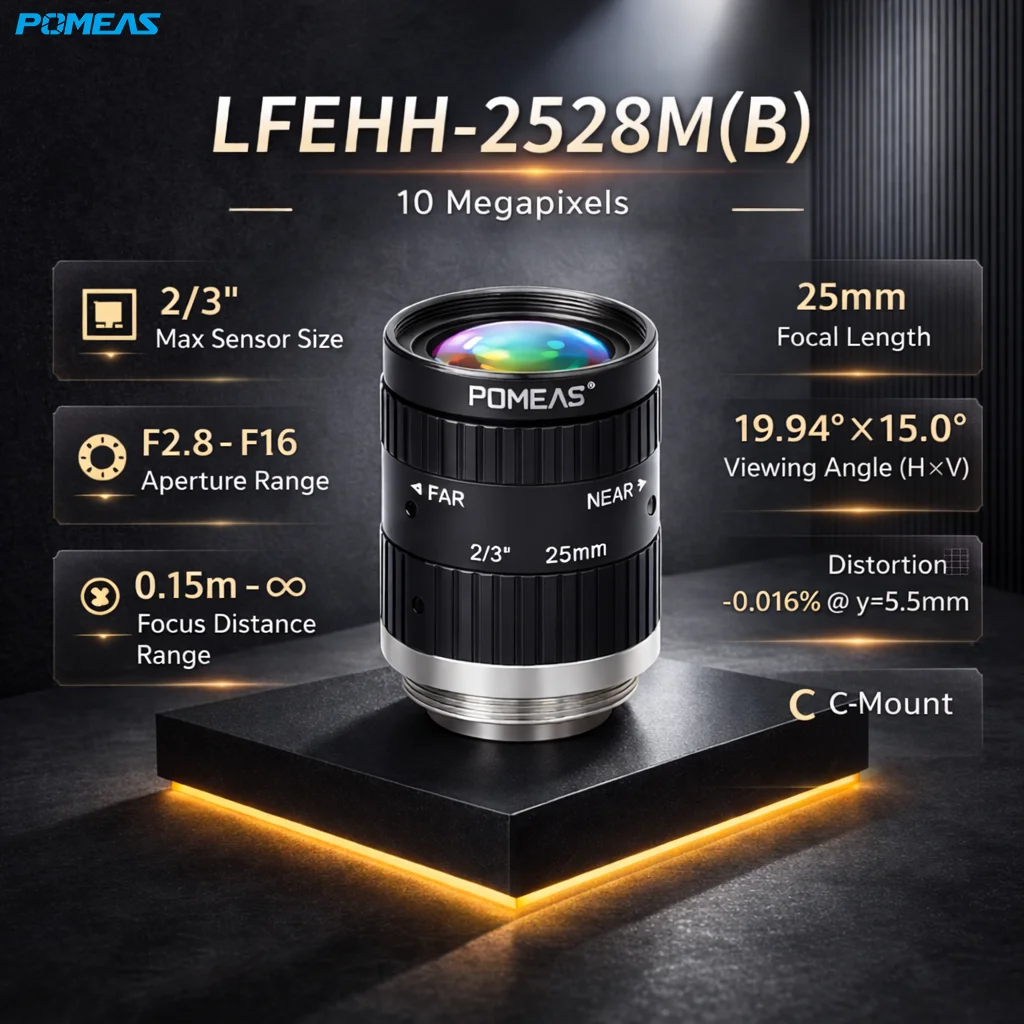
PMS-LFEHH-2528M(B) is a 25mm 10MP C-mount lens for 2/3-inch sensors, covering 420-1000 nm with low distortion and 0.15 m focus for detailed inspection.
SKU:
25mm 10MP VIS-NIR C-Mount Lens for 2/3-Inch Cameras![25mm 2/3-Inch 10MP VIS-NIR C-Mount Lens | POMEAS]()
![25mm 2/3-Inch 10MP VIS-NIR C-Mount Lens | POMEAS]()
![25mm 2/3-Inch 10MP VIS-NIR C-Mount Lens | POMEAS]()
![25mm 2/3-Inch 10MP VIS-NIR C-Mount Lens | POMEAS]()
![25mm 2/3-Inch 10MP VIS-NIR C-Mount Lens | POMEAS]()
![25mm 2/3-Inch 10MP VIS-NIR C-Mount Lens | POMEAS]()
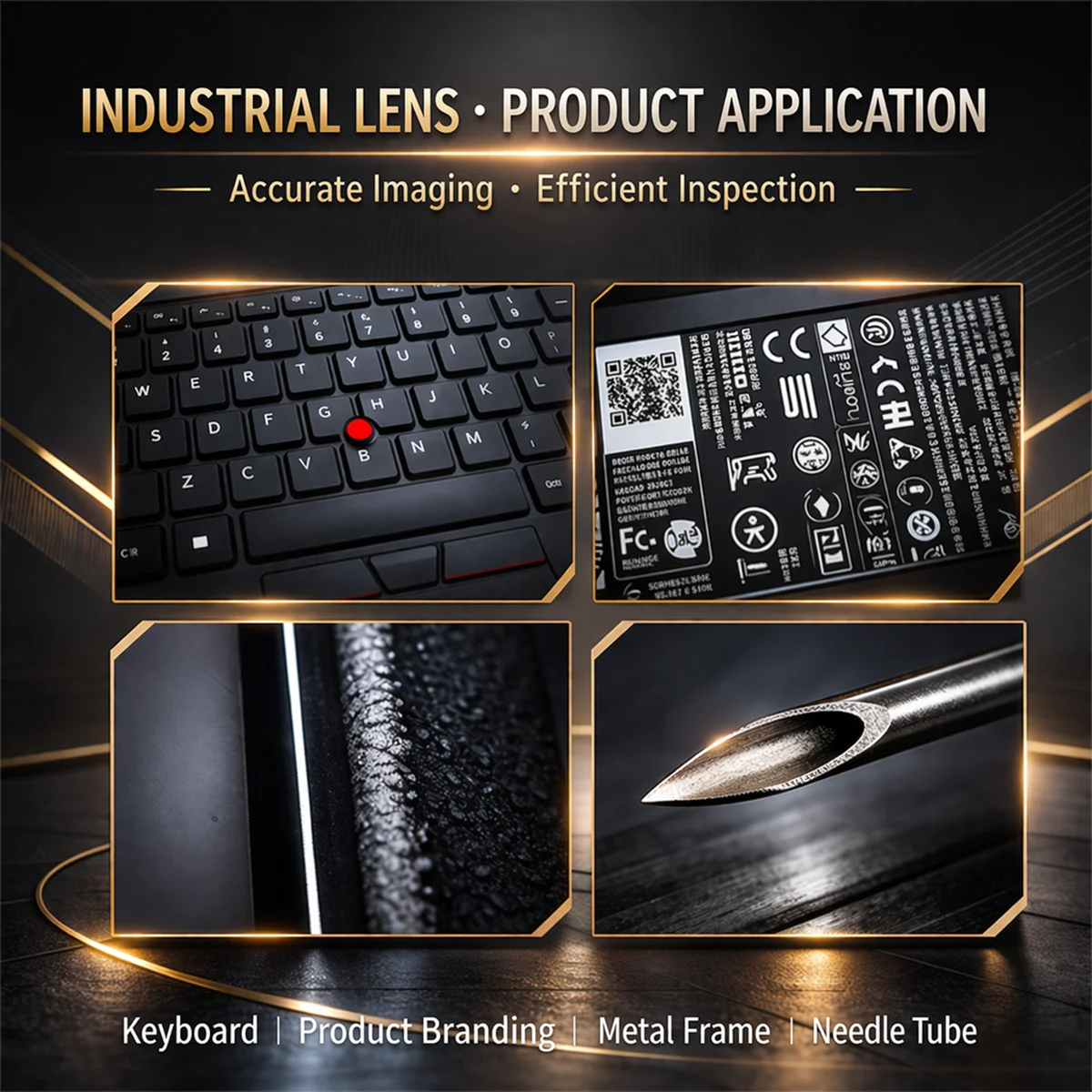
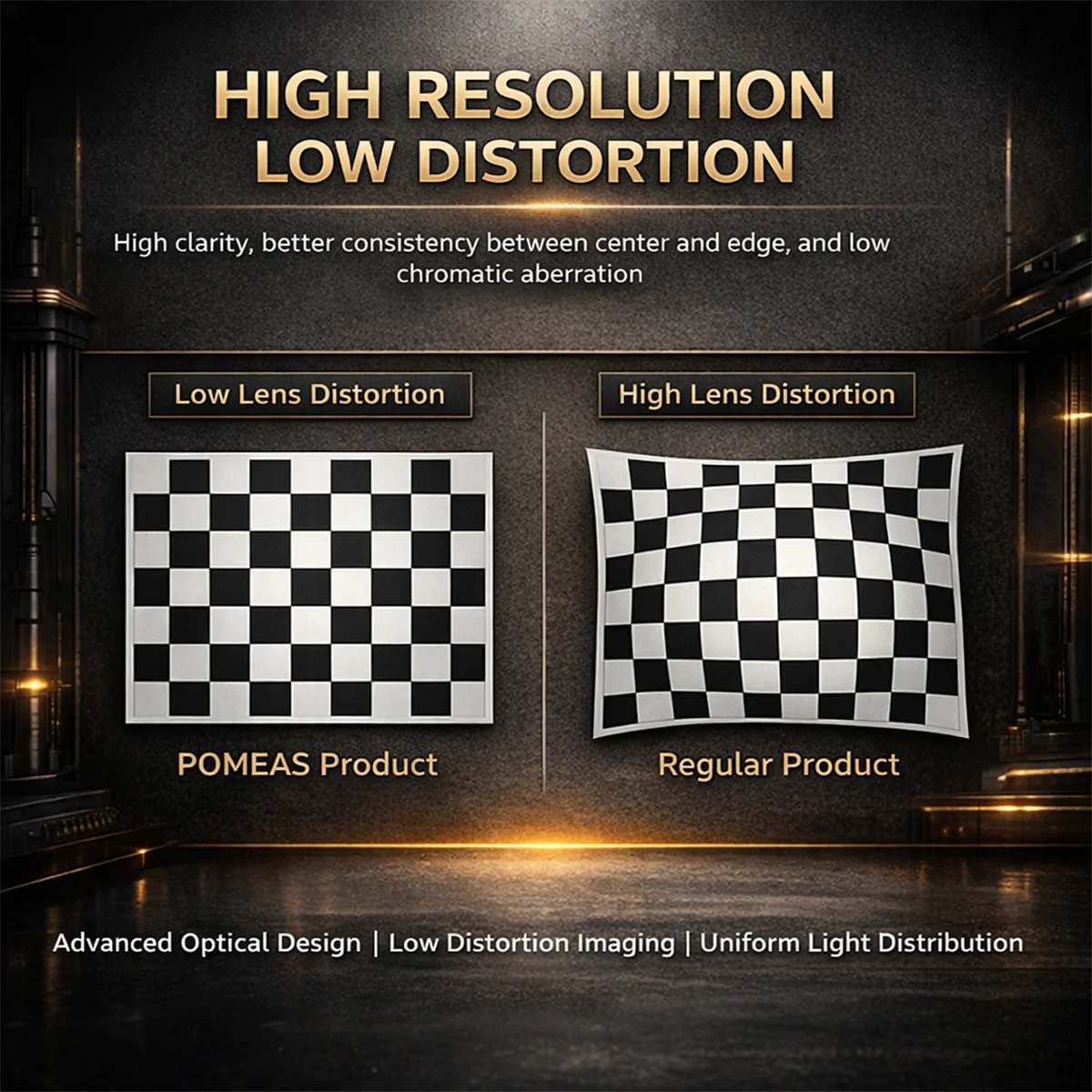
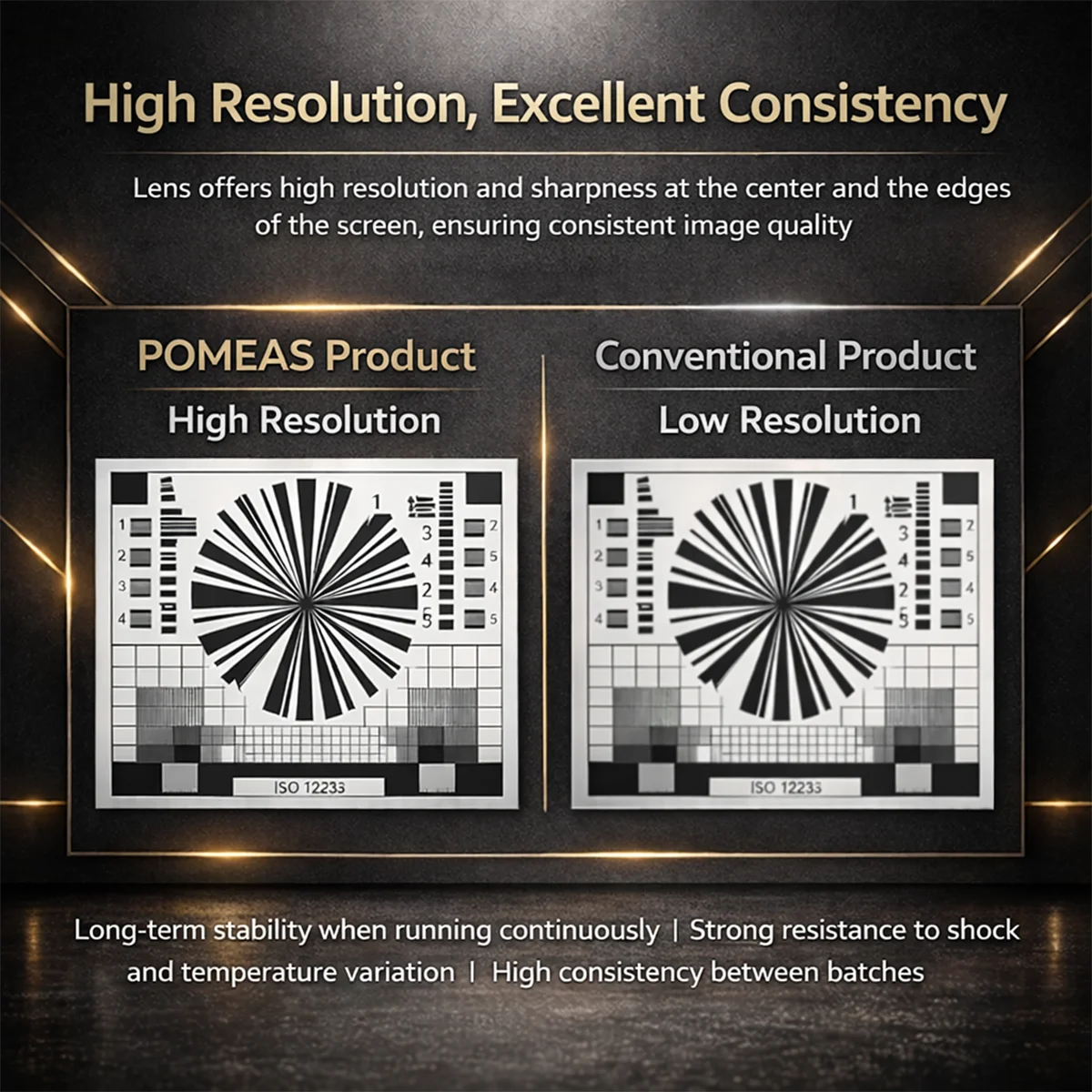
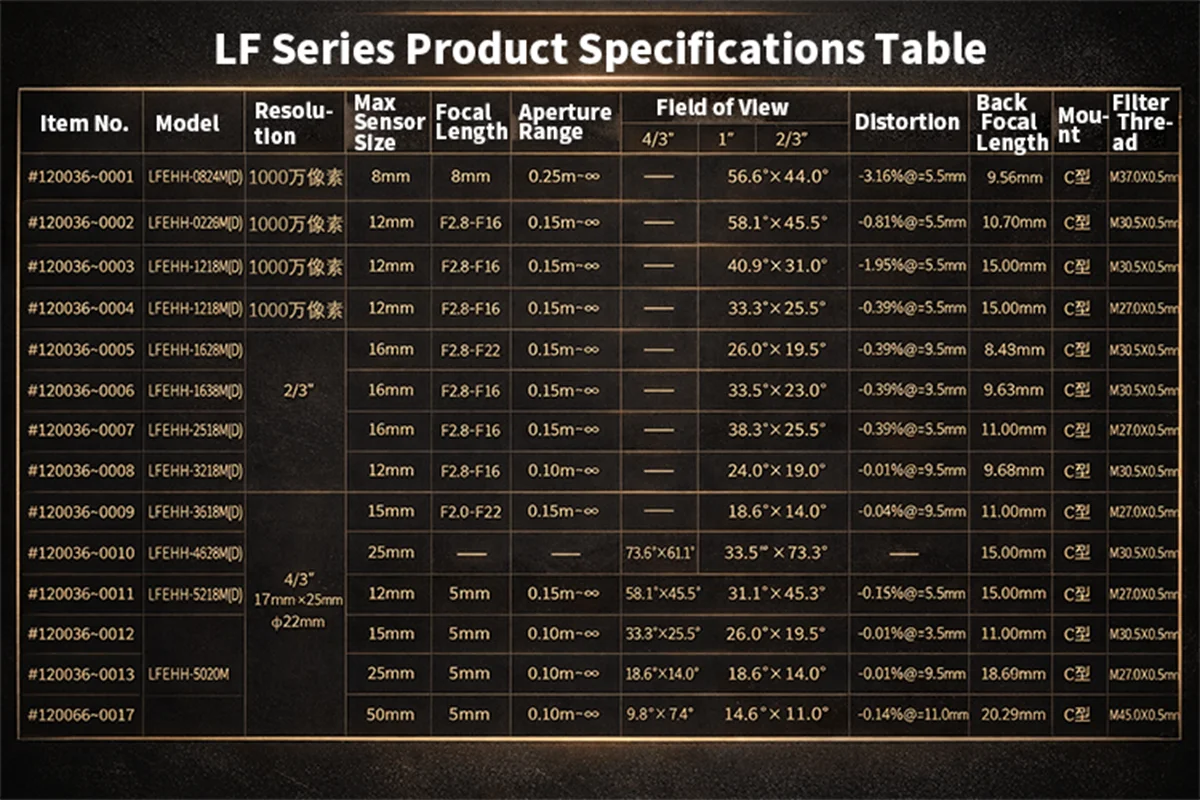
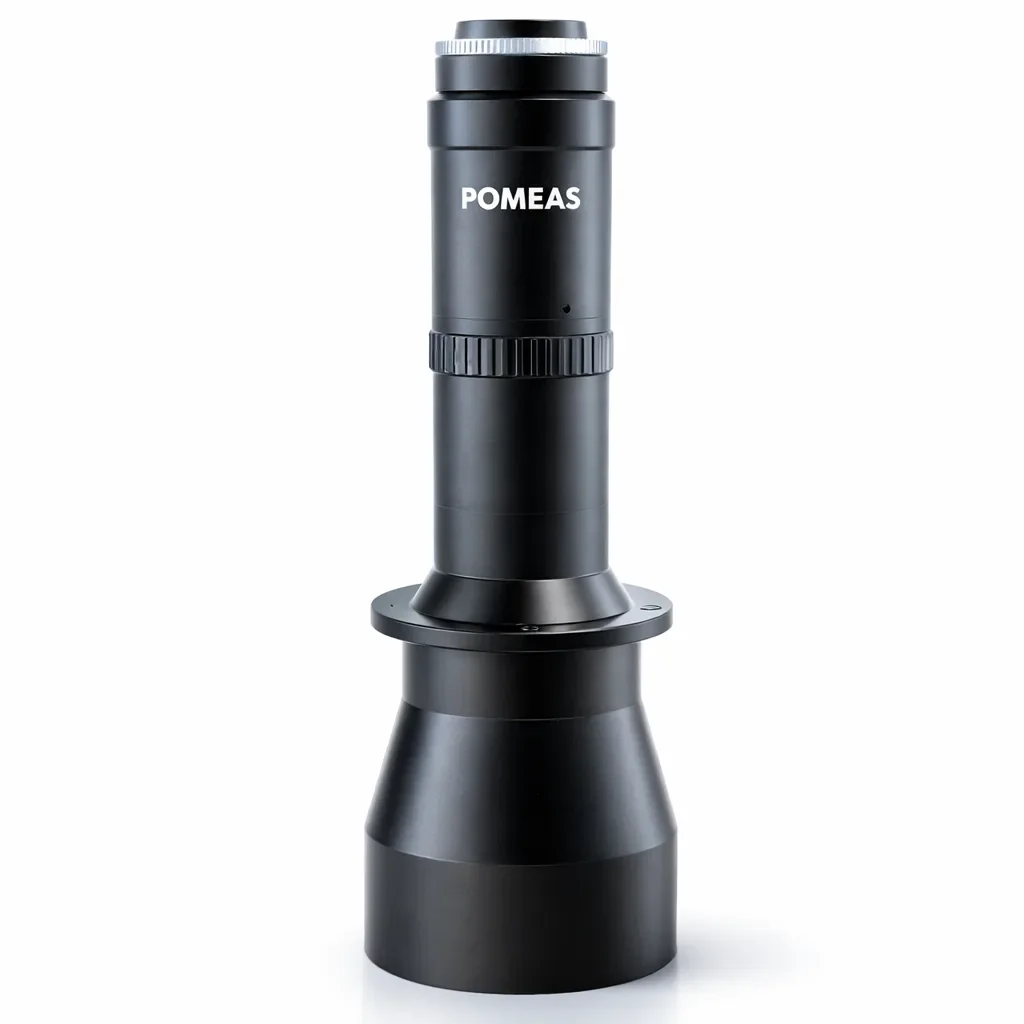
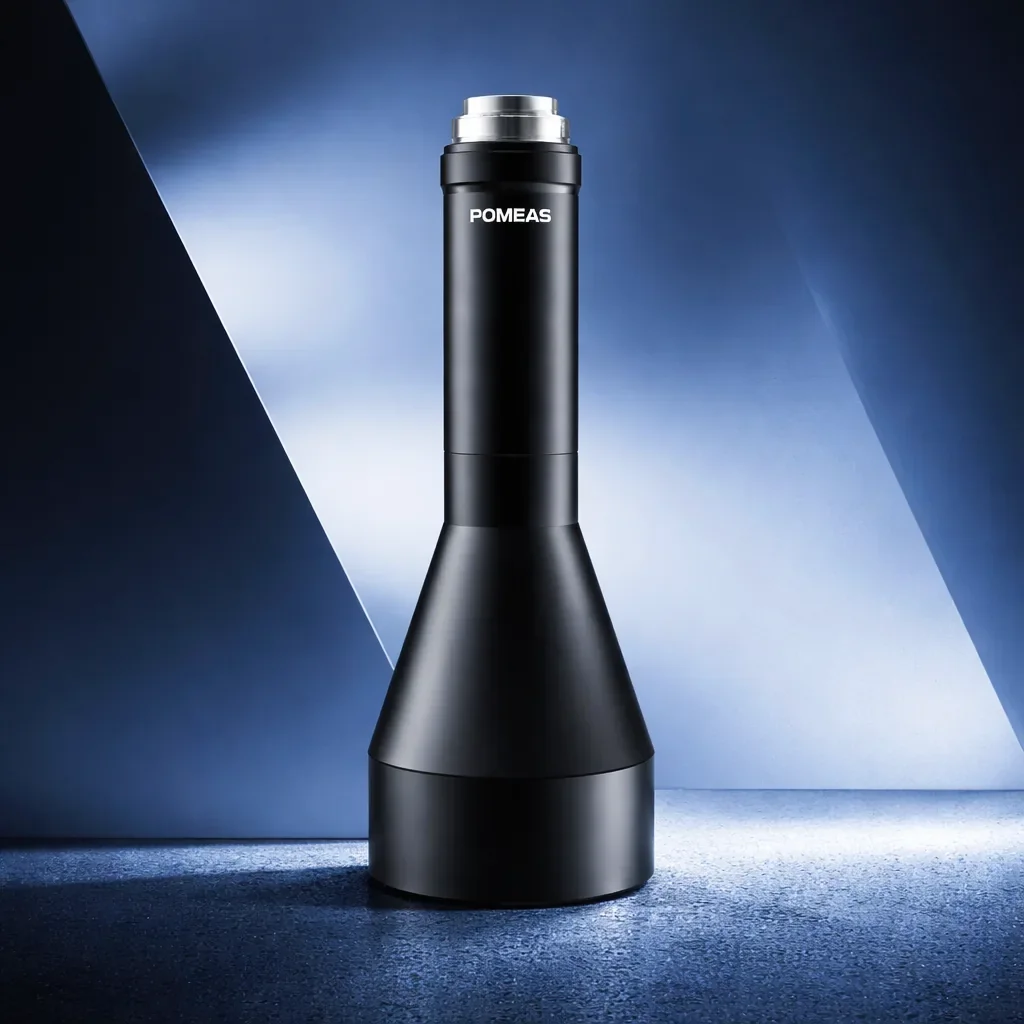
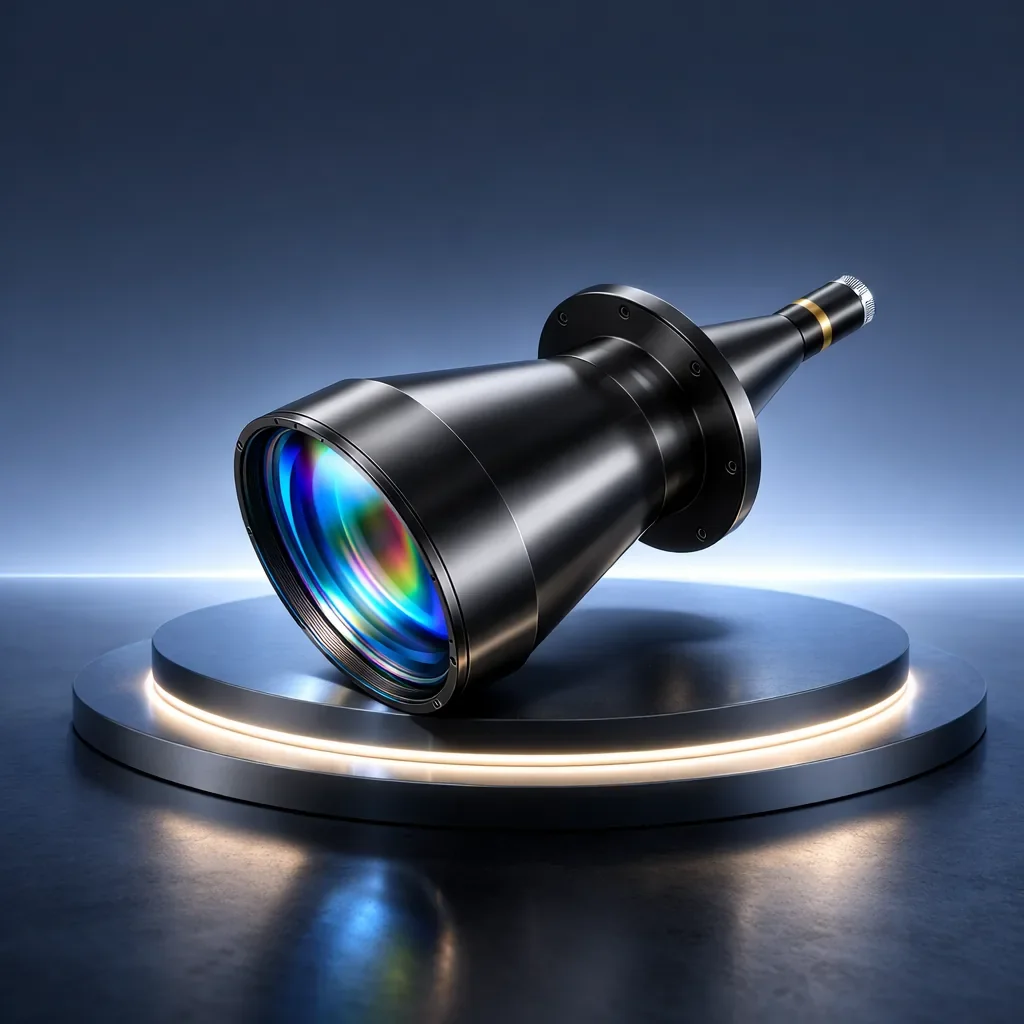
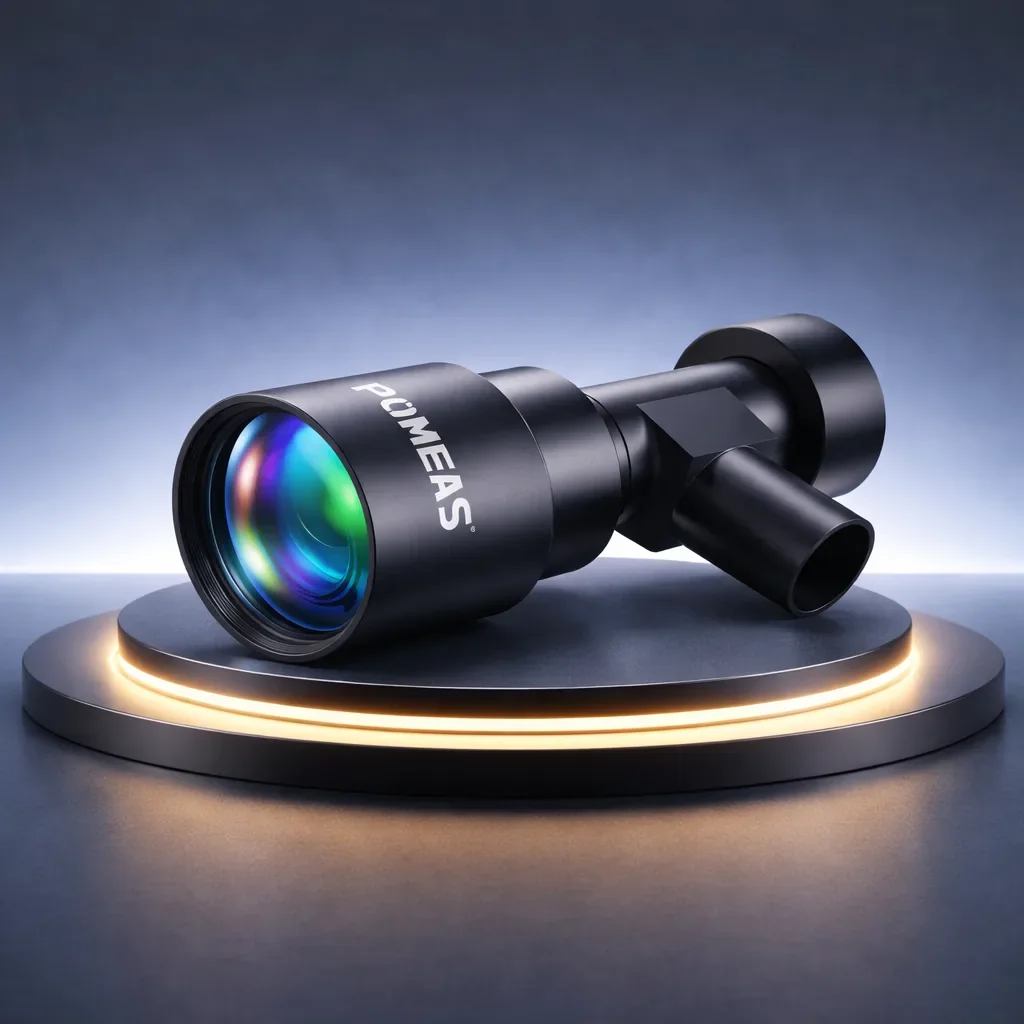
The POMEAS PMS-LFEHH-2528M(B) is a 25mm fixed focal FA lens designed for C-mount machine vision cameras with sensors up to 2/3 inch. It is rated for 10MP imaging and covers a specified wavelength range of 420-1000 nm, allowing it to be evaluated for visible-light and selected near-infrared inspection systems.
Its 25mm focal length provides a narrower field of view than 12mm or 16mm lenses used with the same camera and working distance. This places more camera pixels across a smaller inspection region and reduces unnecessary background around the target.
The lens also provides an F2.8-F16 manual iris, a 0.15 m to infinity focusing range, and published distortion data for 2/3-inch, 1/2-inch, and 1/3-inch sensors.
Key Features
10MP Imaging for Detailed Inspection
The PMS-LFEHH-2528M(B) is rated for 10MP machine vision imaging.
This makes it suitable for applications requiring detailed inspection of labels, connectors, electronic components, edges, holes, and defined surface regions. Final compatibility should still be checked using the camera sensor dimensions, pixel size, required field of view, and smallest feature to be detected.
Two cameras with the same megapixel count may use different sensor sizes and pixel pitches. Megapixel count alone is therefore not sufficient for confirming lens performance.
Supports Sensors up to 2/3 Inch
The lens supports sensors up to the specified 2/3-inch format with an active image size of 11 mm.
The product data also provides optical specifications for 1/2-inch and 1/3-inch sensors. Smaller sensors use a reduced central portion of the image and therefore capture a narrower field of view at the same working distance.
Sensors larger than 2/3 inch should not be used unless image-circle coverage and edge image quality are separately confirmed.
25mm Focal Length for a Concentrated Field of View
Compared with shorter focal-length lenses, the 25mm focal length captures a smaller inspection area at the same working distance.
This can help:
- Place more camera pixels on a small object or feature
- Reduce unnecessary background
- Inspect individual components, connectors, labels, and terminals
- Maintain a longer camera-to-object distance for a required field of view
- Improve feature visibility when a shorter lens captures too much area
A shorter focal length should be selected when the complete object cannot fit into the 25mm field of view.
Published Low-Distortion Performance
The product sheet provides the following distortion values:
- 2/3-inch sensor: -0.016% at y = 5.5 mm
- 1/2-inch sensor: -0.019% at y = 4.0 mm
- 1/3-inch sensor: -0.013% at y = 3.0 mm
These published values are relevant for edge detection, feature localization, part positioning, and calibrated image measurement.
Lens distortion should not be treated as guaranteed system accuracy. The complete camera, lens, working distance, mounting structure, calibration method, and image-processing software must still be tested against the required tolerance.
420-1000 nm Wavelength Range
The specified 420-1000 nm wavelength range covers visible light and part of the near-infrared spectrum.
This allows the lens to be considered for systems using visible LED lighting or selected near-infrared illumination to improve contrast between materials, printing, coatings, contamination, or surface features.
The specification does not guarantee identical focus, transmission, or resolution at every wavelength. Systems using a specific narrow-band light source should be tested with the actual camera, filter, and illumination.
0.15 m to Infinity Focusing Range
The standard focusing range is specified as 0.15 m to infinity.
This supports inspection systems operating from relatively short distances as well as installations where the camera must remain farther from the target.
The supplied field-of-view table also includes a 100 mm working-distance configuration using a 3 mm extension ring. This extension-ring configuration should be confirmed before ordering because it changes the focusing condition and magnification.
F2.8-F16 Manual Iris
The adjustable F2.8-F16 iris allows the integrator to balance image brightness, exposure time, and depth of field.
Opening the iris allows more light to reach the sensor and may help reduce exposure time. Closing the iris can increase depth of field when the inspection object has moderate height variation, although stronger illumination may then be required.
The final aperture setting should be selected together with the camera exposure, object speed, and lighting intensity.
Compact Ø29 mm C-Mount Structure
The lens uses a C-mount interface and has a maximum outer diameter of Ø29 mm according to the dimension drawing.
The compact housing helps reduce interference with camera brackets, lighting, protective covers, and nearby automation components.
Mechanical clearance around the focus and iris controls should still be checked before installation.
Technical Specifications
Model: PMS-LFEHH-2528M(B)
Lens Type: Fixed focal machine vision FA lens
Resolution Rating: 10MP
Focal Length: 25 mm
Maximum Sensor Format: 2/3 inch
Active Image Size: 11 mm
Wavelength Range: 420-1000 nm
Aperture Range: F2.8-F16
Focusing Range: 0.15 m to infinity
Camera Mount: C-Mount
Filter Thread: M27 × 0.5 mm
Back Focal Length in Air: 10.31 mm
Focus Adjustment: Manual
Iris Adjustment: Manual
Operating Temperature: -20°C to +60°C
Maximum Outer Diameter: Ø29 mm
Angle of View
2/3-Inch Sensor
Diagonal: 24.78°
Horizontal: 19.94°
Vertical: 15.0°
1/2-Inch Sensor
Diagonal: 18.16°
Horizontal: 14.57°
Vertical: 11.0°
1/3-Inch Sensor
Diagonal: 13.67°
Horizontal: 10.9°
Vertical: 8.2°
A smaller sensor captures a narrower field of view because it uses a smaller central portion of the lens image.
Object Size at Minimum Focusing Distance
The product sheet provides the following reference object sizes:
2/3-inch sensor: 58.9 × 47.1 × 35.3 mm
1/2-inch sensor: 42.8 × 34.3 × 25.7 mm
1/3-inch sensor: 32.1 × 25.68 × 19.3 mm
The values correspond to diagonal, horizontal, and vertical object coverage.
Actual coverage should still be confirmed using the active dimensions of the selected camera sensor and the real mechanical focusing condition.
Reference Field of View
The following reference values are taken from the supplied product sheet.
| Extension Ring | Working Distance | 2/3-Inch FOV H × V | 1/2-Inch FOV H × V |
|---|---|---|---|
| 0 mm | 1000 mm | 333.01 × 276.79 mm | 242.19 × 201.30 mm |
| 0 mm | 750 mm | 248.42 × 206.48 mm | 180.67 × 150.17 mm |
| 0 mm | 500 mm | 163.85 × 136.18 mm | 119.16 × 99.04 mm |
| 0 mm | 300 mm | 96.17 × 79.93 mm | 69.94 × 58.13 mm |
| 0 mm | 200 mm | 62.31 × 51.79 mm | 45.32 × 37.67 mm |
| 0 mm | 150 mm | 45.38 × 37.72 mm | 33.00 × 27.43 mm |
| 3 mm | 100 mm | 29.26 × 24.32 mm | 21.28 × 17.69 mm |
These values are reference data from the product sheet. Final field of view should be confirmed using the actual camera sensor dimensions, mechanical working distance, focusing position, and extension-ring configuration.
Camera and Sensor Compatibility
The PMS-LFEHH-2528M(B) is designed for C-mount cameras with sensors up to 2/3 inch.
It can also be used with compatible 1/2-inch and 1/3-inch cameras. Before confirming compatibility, check:
- Camera model
- Active sensor width and height
- Sensor optical format
- Camera resolution
- Pixel size
- C-mount interface
- Flange and adapter configuration
- Camera housing dimensions
- Required optical filter
- Illumination wavelength
- Available installation space
The 10MP rating does not guarantee compatibility with every 10MP camera. Cameras with smaller pixels can place greater resolving demands on the lens.
Field of View and Working Distance Guidance
The actual field of view depends on:
- Lens focal length
- Active sensor dimensions
- Working distance
- Extension-ring thickness
- Focusing position
- Camera aspect ratio
For the same camera:
- Increasing the working distance increases the visible object area.
- Reducing the working distance decreases the visible object area.
- A 25mm lens captures a narrower scene than a 16mm or 12mm lens.
- A larger sensor captures a wider scene than a smaller sensor.
- Adding an extension ring changes the focusing range and magnification.
This 25mm model is suitable when a shorter lens captures more area than required and more camera pixels are needed on a smaller inspection target.
For selection confirmation, provide:
- Camera model
- Sensor size
- Camera resolution
- Pixel size
- Available working distance
- Required horizontal and vertical field of view
- Smallest inspection feature
- Required inspection accuracy
- Illumination wavelength
Recommended Applications
Electronic Component and Connector Inspection
The 25mm focal length can place more camera pixels on connectors, terminals, switches, small components, and selected PCB regions than a shorter focal-length lens used at the same distance.
Application boundary: Fine solder defects and microscopic circuit features must be checked against the actual field of view and object-side pixel resolution.
Label, Barcode, and Character Inspection
The lens may be used for labels, serial numbers, printed characters, date codes, and machine-readable codes.
Its concentrated field of view can provide more pixel coverage on the code or label than a wider lens when the camera position remains unchanged.
Application boundary: Barcode module size, character height, motion speed, exposure time, and illumination must be confirmed.
Part Positioning and Edge Detection
The published distortion values make the lens relevant for detecting edges, holes, marks, reference features, and part orientation.
Application boundary: The complete system must be calibrated when coordinate accuracy is required. Object-height changes can also alter apparent position and scale.
Assembly and Presence Verification
The lens can support inspection of fasteners, clips, seals, connectors, inserted parts, and defined assembly positions.
Application boundary: A shorter focal length may be required when several widely separated inspection regions must fit into one image.
Visible and Near-Infrared Inspection
The 420-1000 nm specification allows the lens to be evaluated for visible-light and selected near-infrared applications.
Near-infrared illumination may improve contrast for certain materials, coatings, printing, contamination, or surface conditions.
Application boundary: Camera sensitivity, filter transmission, focus shift, and final image quality should be tested at the actual operating wavelength.
Selection Notes
Choose This 25mm Model When
- The camera sensor is 2/3 inch or smaller
- A 10MP lens rating is required
- A C-mount interface is available
- A relatively narrow field of view is required
- A 16mm lens captures more area than necessary
- More camera pixels are needed on a small feature
- Visible or near-infrared illumination within 420-1000 nm is planned
- Published distortion and field-of-view data are required
- The standard working condition is 0.15 m or greater
Choose a Shorter Focal Length When
- A wider object or production area must fit into one image
- Several components must be inspected simultaneously
- The available camera distance is limited
- The 25mm field of view is too narrow
- Pixel concentration on small features is less important
Choose a Longer Focal Length When
- The inspection region is even smaller
- More camera pixels are needed on a very small feature
- The camera can be positioned farther from the object
- The target occupies only a small portion of the 25mm image
When a Standard FA Lens Is Usually Sufficient
A conventional FA lens may be suitable for:
- Presence and absence inspection
- Label and code reading
- Assembly verification
- Surface inspection
- Component-position checks
- Part localization
- Robot guidance
- Calibrated edge detection
When to Consider a Telecentric Lens
Consider a telecentric lens when:
- Dimensional measurement accuracy is the primary objective
- Object height changes during inspection
- Magnification must remain stable across different depths
- Perspective error cannot be accepted
- Edge position must remain consistent
- The measurement tolerance is too strict for a conventional FA lens
When This Lens May Not Be Suitable
The PMS-LFEHH-2528M(B) may not be suitable when:
- The camera sensor is larger than 2/3 inch
- The camera does not have a compatible C-mount interface
- The required field of view is wider than the 25mm lens provides
- The required working distance is below 0.15 m without an approved extension-ring configuration
- High-accuracy dimensional measurement is required without calibration
- Object-height variation causes unacceptable perspective changes
- Identical optical performance across the complete 420-1000 nm range must be guaranteed
- Motorized focus or motorized iris control is required
FAQ
Can the PMS-LFEHH-2528M(B) be used with a 2/3-inch camera?
Yes. The lens is specified for sensors up to 2/3 inch and provides angle-of-view, object-size, distortion, and field-of-view data for this format.
Can it be used with 1/2-inch or 1/3-inch sensors?
Yes. The product sheet provides optical data for both formats. A smaller sensor captures a narrower field of view at the same working distance.
What field of view does the 25mm lens provide?
The field of view depends on sensor size and working distance. For example, the supplied data lists a 2/3-inch field of view of 62.31 × 51.79 mm at 200 mm and 163.85 × 136.18 mm at 500 mm.
How does this model differ from the PMS-LFEHH-2518M(D)?
Both models use a 25mm focal length and support 2/3-inch, 10MP cameras. The PMS-LFEHH-2528M(B) additionally provides a specified 420-1000 nm wavelength range, F2.8-F16 aperture, published numerical distortion data, and detailed working-distance and field-of-view references.
Can this lens be used with near-infrared illumination?
The specified wavelength range is 420-1000 nm, so it can be evaluated for selected near-infrared applications. Final focus, transmission, and resolution should be tested at the actual operating wavelength.
Is the lens suitable for dimensional measurement?
It may be used in a calibrated system when the complete setup has been validated against the required tolerance. A telecentric lens is more appropriate when object-height variation or perspective error cannot be accepted.
Is an extension ring required at 100 mm working distance?
The supplied reference table specifies a 3 mm extension ring for the 100 mm configuration. This setup should be confirmed with POMEAS before ordering.
Request Lens Selection Support
Please provide POMEAS with:
Camera model
Sensor size
Camera resolution
Pixel size
Available working distance
Required field of view
Inspection object
Smallest feature to detect
Accuracy requirement
Illumination wavelength
Object height variation
POMEAS will review sensor coverage, expected field of view, object-side pixel resolution, wavelength requirements, extension-ring configuration, and mechanical compatibility before recommending the final setup.
Related Reading
Related Products
- Active Image Size
- 11 mm
- Aperture Range
- F2.8-F16
- Back Focal Length in Air
- 10.31 mm
- Camera Mount
- C-Mount
- Filter Thread
- M27 × 0.5 mm
- Focal Length
- 25 mm
- Focusing Range
- 0.15 m to infinity
- Maximum Sensor Format
- 2/3 inch
- Model
- PMS-LFEHH-2528M(B)
- Product Type
- Fixed Focal Machine Vision FA Lens
- Resolution Rating
- 10MP
- Wavelength Range
- 420-1000 nm

Subscribe to Our Newsletter
Simply enter your email to receive the latest news and insights from Pomeas. Stay connected with Pomeas and be the first to discover new innovations in optical excellence.



1 Files