Machine Vision Knowledge Base
Knowledge
6.5X Zoom Lens Selection Guide for Machine Vision
How to choose a 6.5X zoom lens for machine vision: magnification range, working distance, control method, optical quality and integration - with POMEAS LZ model specifications.
Zoom Lens vs Fixed Focal Lens for Machine Vision Inspection
Zoom lens vs fixed focal lens trade-offs for inspection systems - FOV flexibility, repeatability and cost - and when each is the right choice.
How RS232 Magnification Feedback Enables Repeatable Automated Inspection
RS232 magnification position feedback makes zoom lens setups repeatable and auditable. Learn the three levels of zoom control and integration practice for vision systems.
Manual vs Motorized Zoom Lens: How to Choose for Machine Vision
Manual vs motorized zoom lens for machine vision compared - repeatability, changeover, cost and control options, with POMEAS LZ series real specs to help you choose.
Point Spectral Confocal vs Laser Triangulation: Which Displacement Sensor to Choose?
Point spectral confocal vs laser triangulation compared: surface compatibility, repeatability, range, spot size and cost - with a clear decision rule for transparent, reflective and rough surfaces.
What Is a Flash Measuring Machine? One-Click Image Dimension Measurement Explained
A flash measuring machine captures all part dimensions in one image and outputs a QC report with one click. Learn how it works, how it compares to manual tools, and how to choose one.
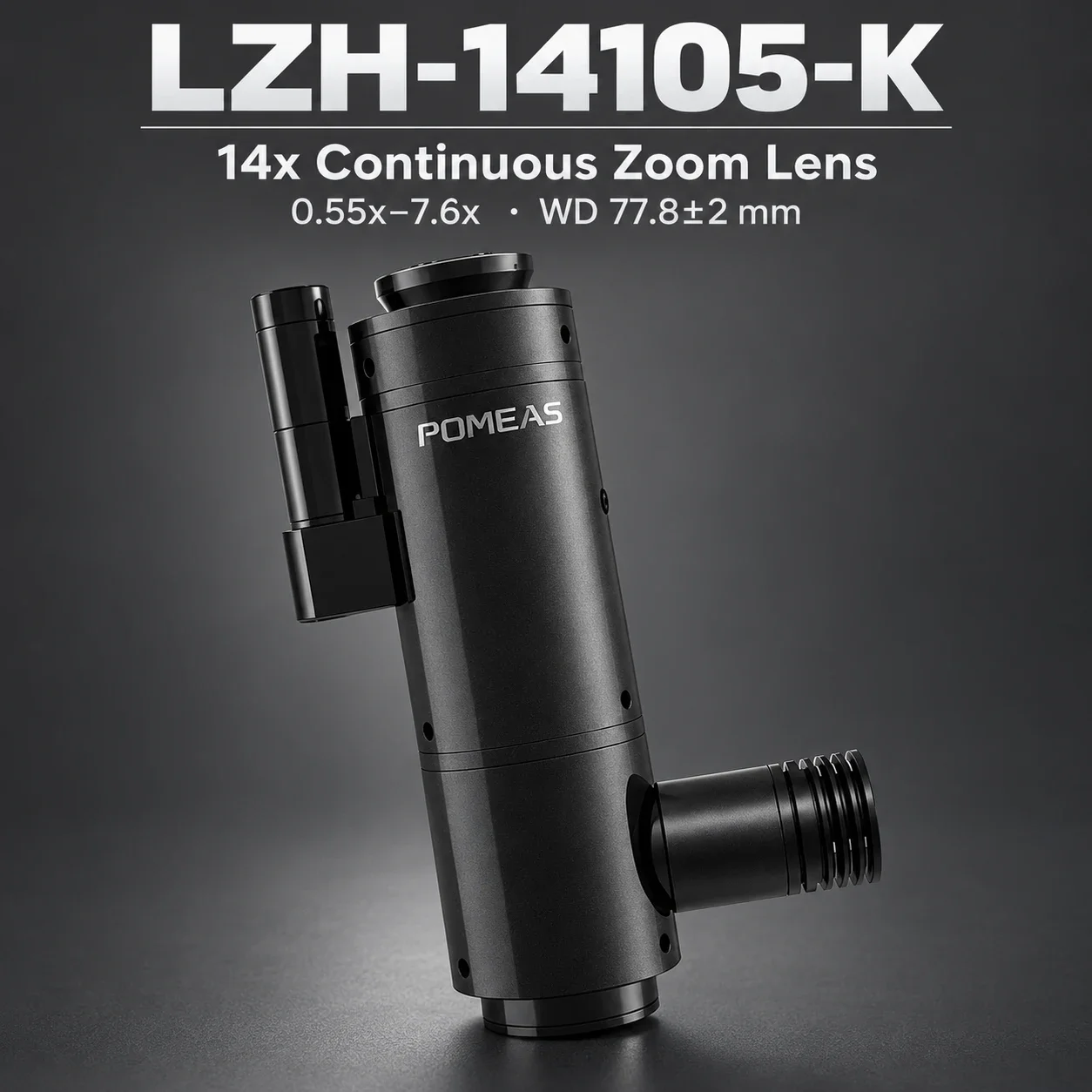
Active Optical Perception: How AI Can Control Zoom and Focus
Traditional machine vision fixes the optics, captures one image, and then runs an algorithm. Active optical perception changes the order: the system captures an image, the AI decides what it needs to see next, and the optics move to a better state before the next capture. The result is a closed l...
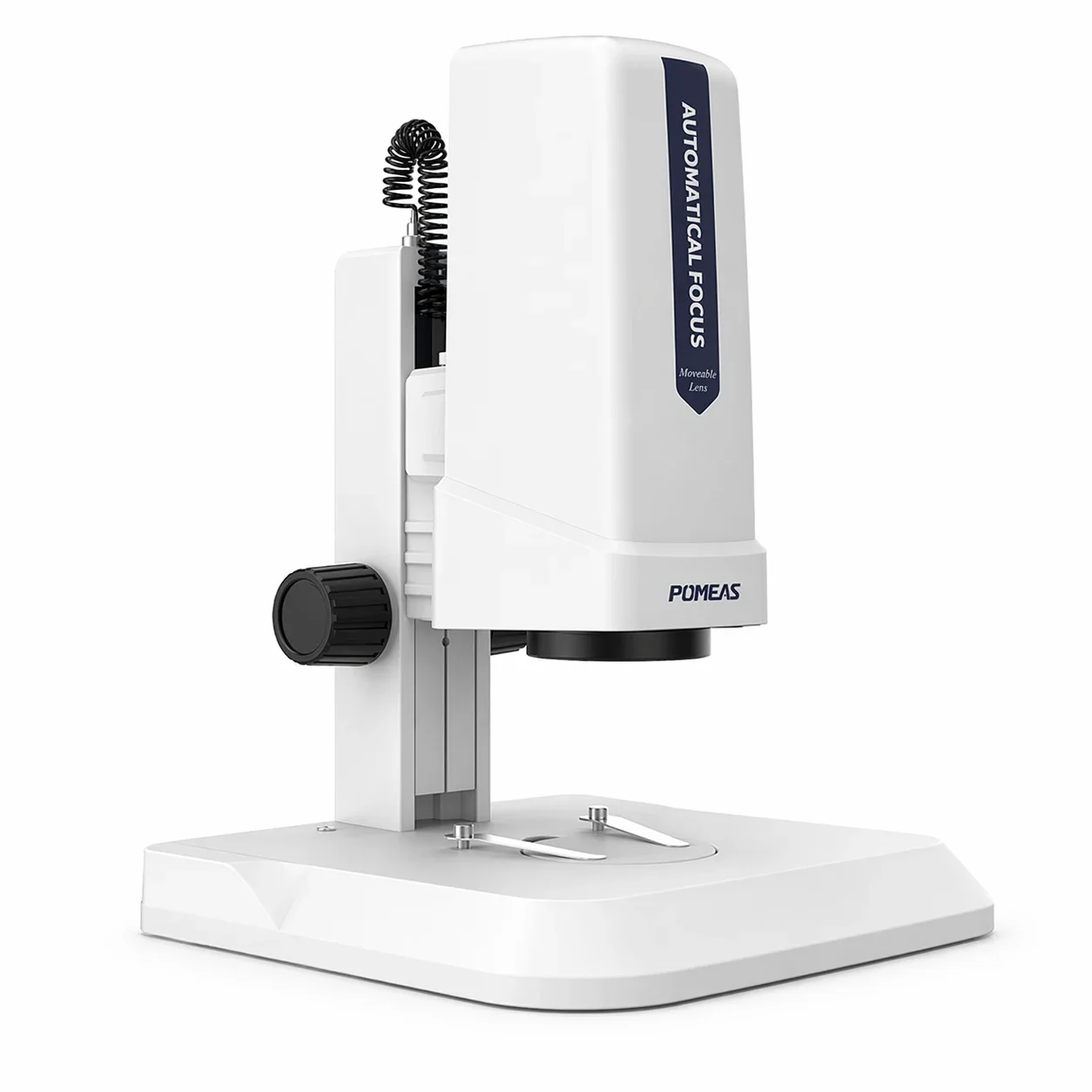
How to Build a Motorized Digital Microscope with Zoom Lens, APO Objective and Autofocus
A motorized digital microscope combines a continuous zoom body, a high-NA apochromatic (APO) objective, an industrial camera, and a motorized focus axis so that magnification and focus can be changed without touching the optics. The result is useful for semiconductor, PCB, LCD, FPD, and precision...
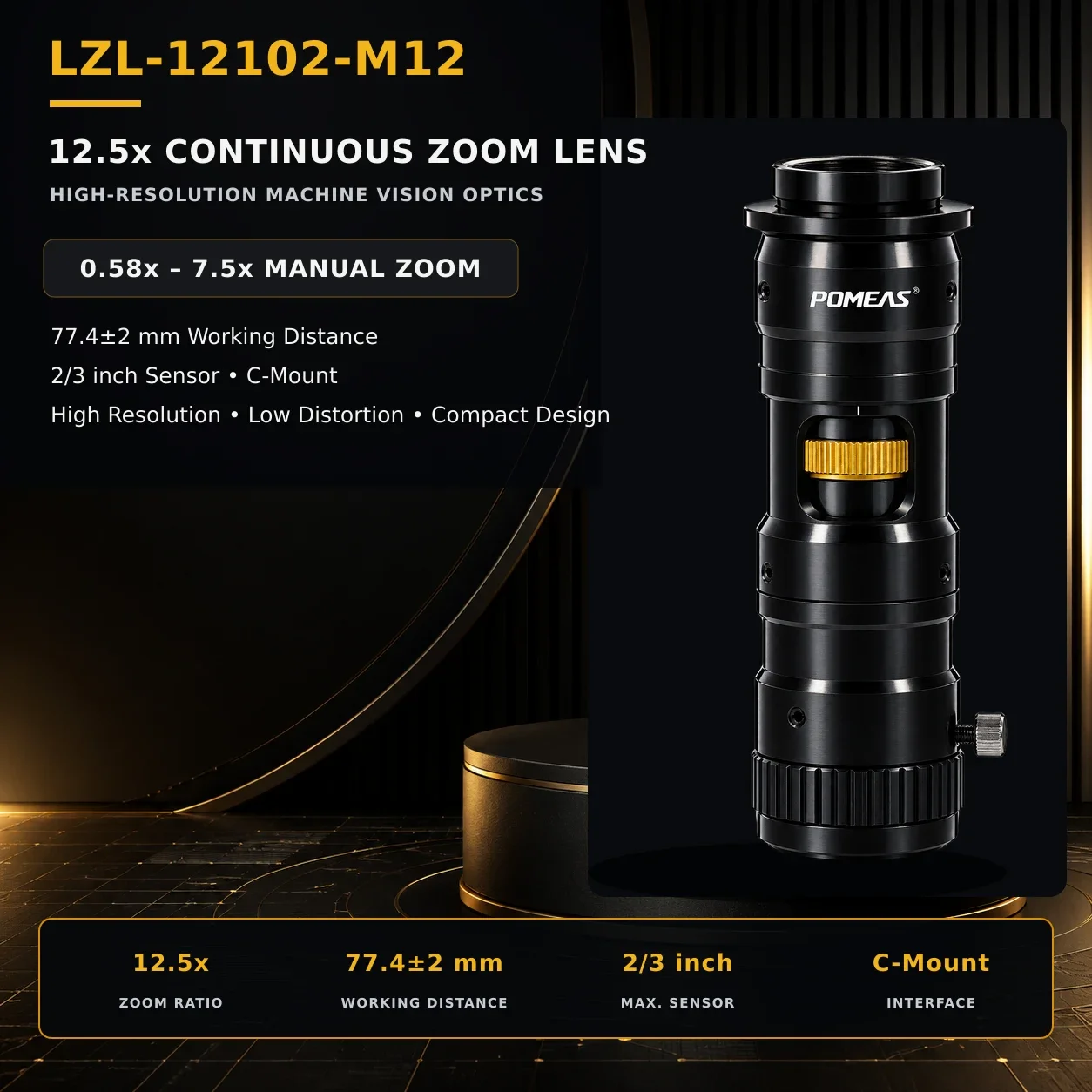
Magnification Is Not Resolution: What Actually Determines the Smallest Visible Feature?
Engineers often start a vision project with a magnification number: “I need 20X,” “I want 400X,” or “The defect is 5 µm, so give me 1000X.” Magnification is easy to say, but it is not the right engineering specification. Magnification only tells you how large an object appears on the sensor or mo...

Subscribe to Our Newsletter
Simply enter your email to receive the latest news and insights from Pomeas. Stay connected with Pomeas and be the first to discover new innovations in optical excellence.