Porduct Details
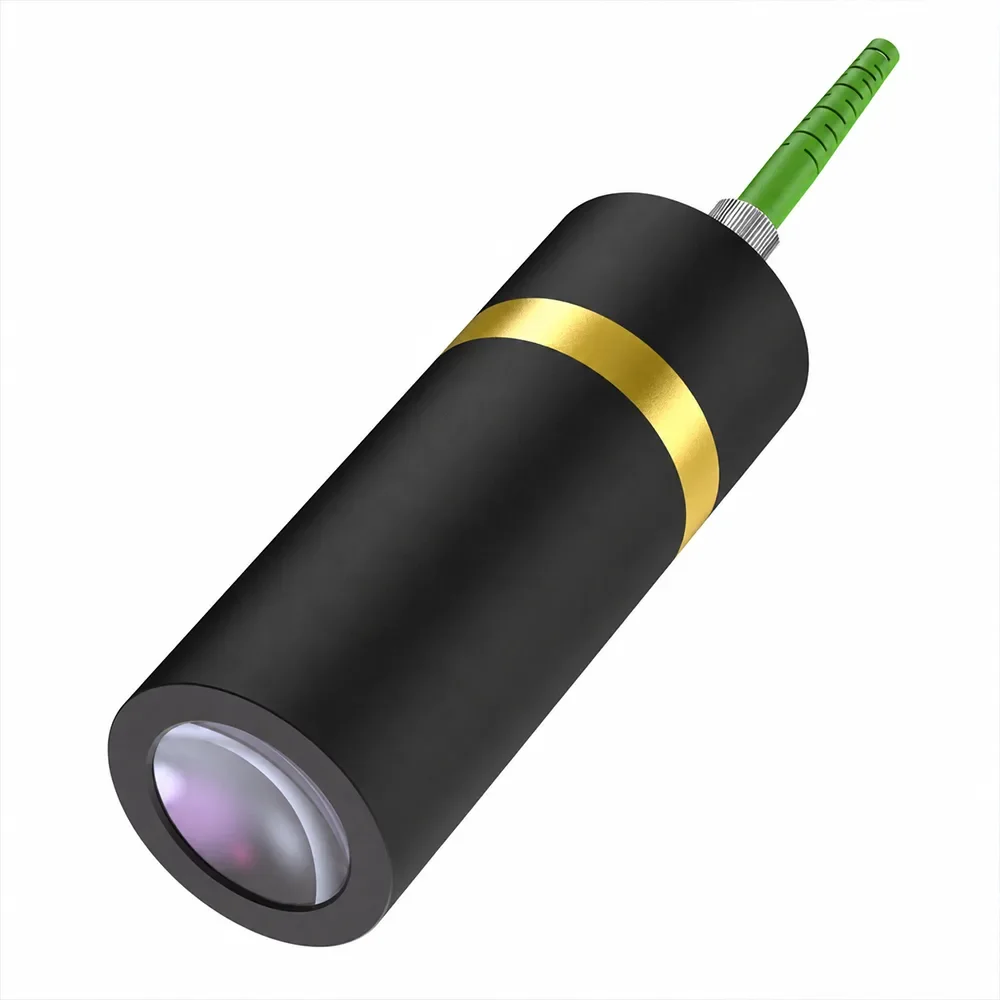
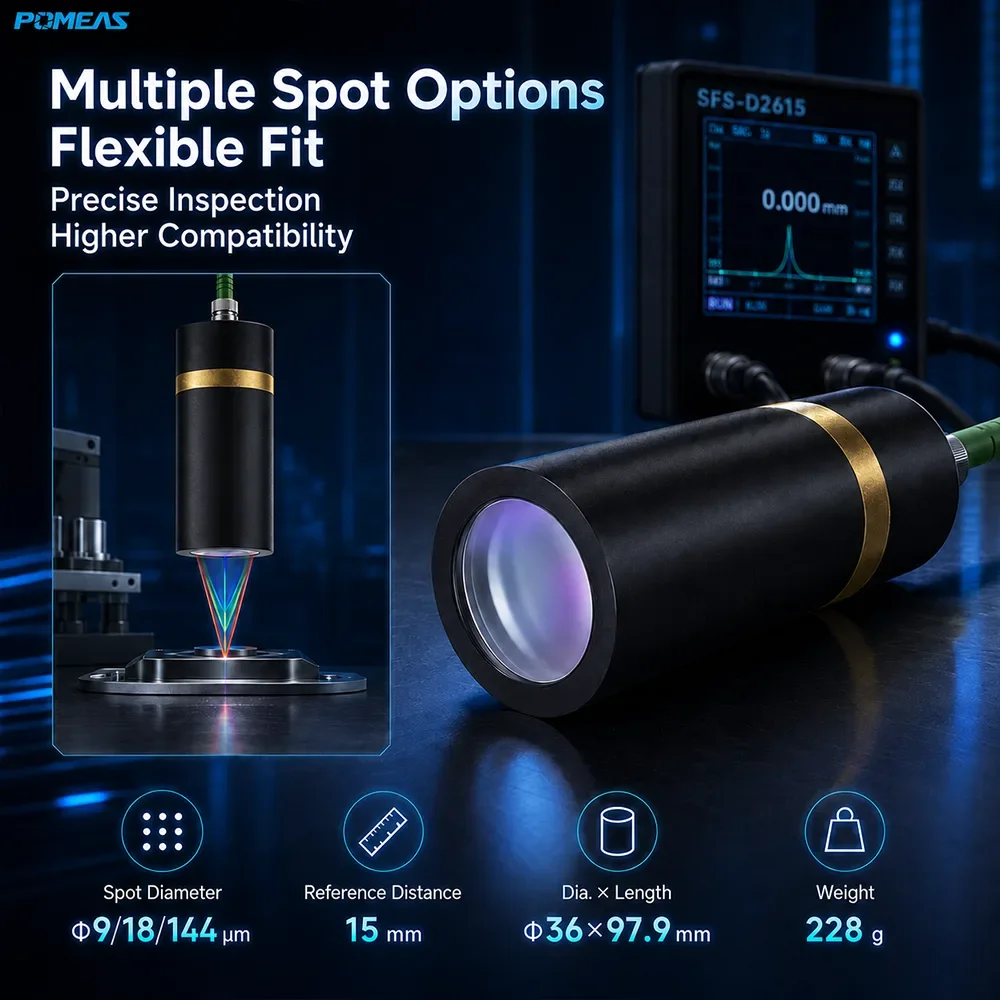
50nm Confocal Displacement Sensor with 9μm Spot
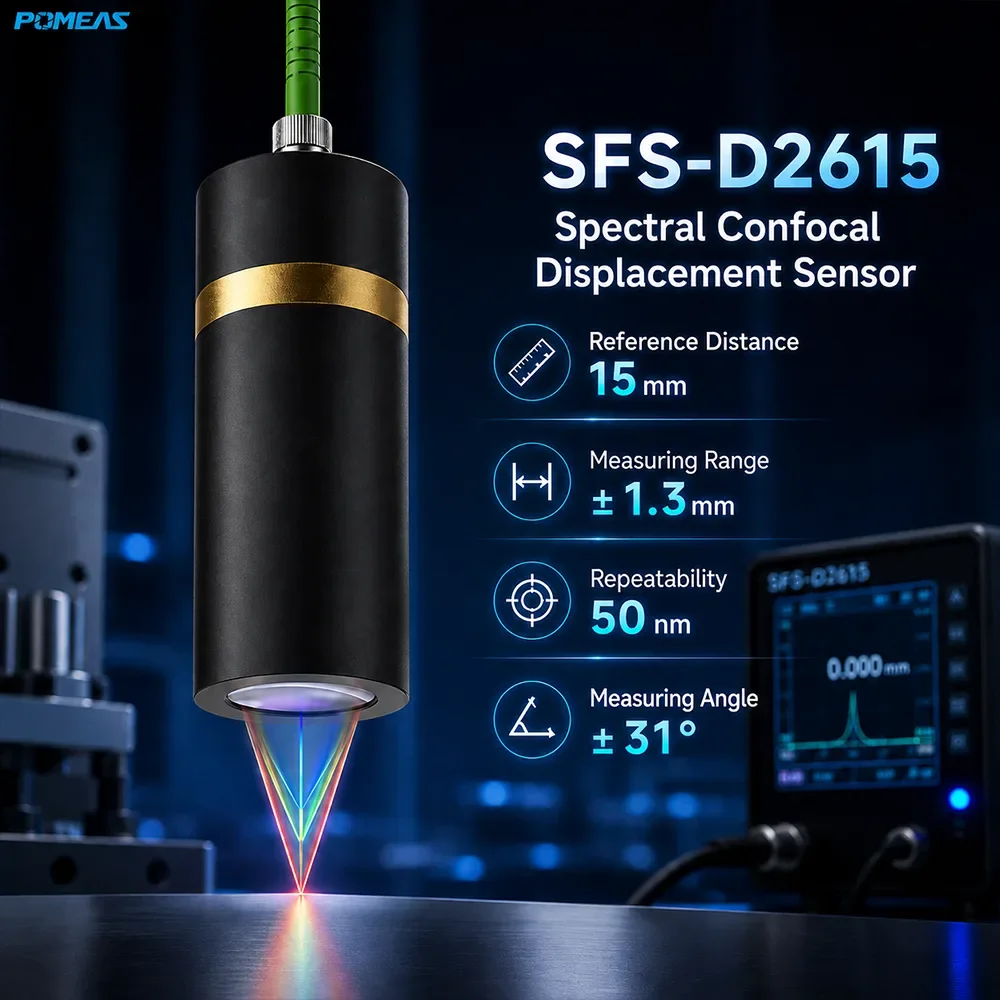
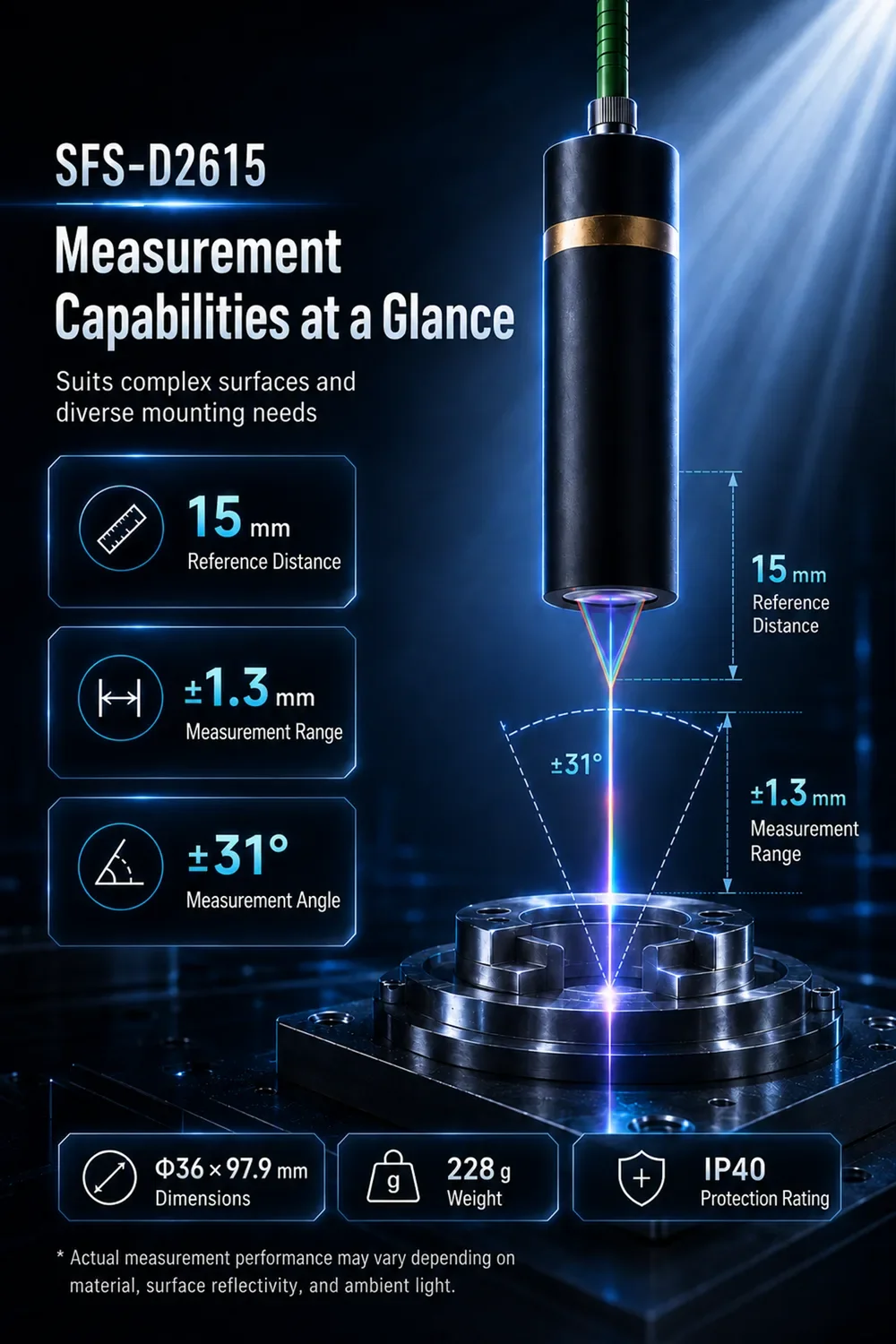
SFS-D2615 is a spectral confocal displacement sensor with 15 mm reference distance, ±1.3 mm measuring range, 50 nm repeatability, ±0.26 μm linearity error and ±31° measuring angle for high-precision non-contact measurement.
SKU:
Product Overview
POMEAS SFS-D2615 is a high-precision spectral confocal displacement sensor with a 15 mm reference distance, ±1.3 mm measuring range, 50 nm repeatability and ±0.26 μm linearity error. The ±31° measuring angle keeps stable output on curved and inclined surfaces, and the non-contact optical measurement avoids scratching precision workpieces. Its Φ36×97.9 mm body weighing about 228 g is easy to mount and integrate.
Key Features
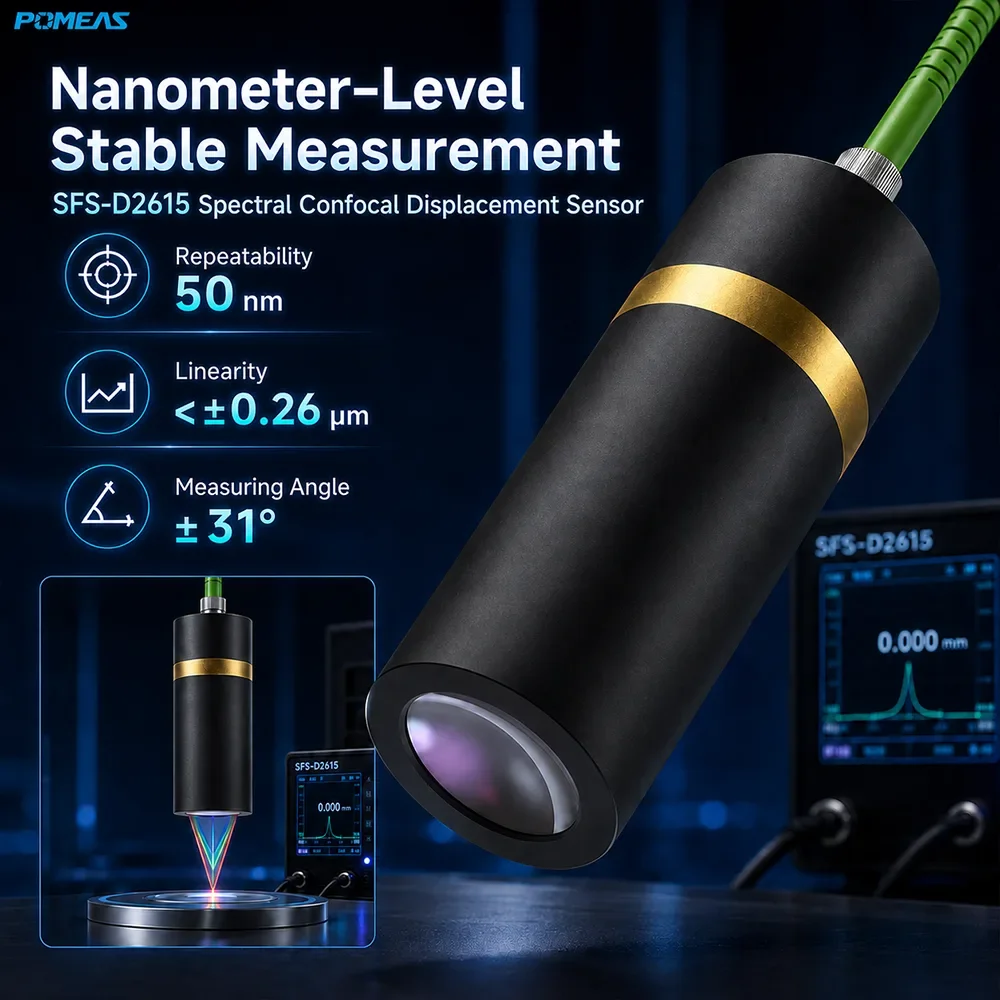
- 50 nm repeatability, linearity error <±0.26 μm
- ±1.3 mm measuring range, 2.6 mm total travel
- ±31° wide measuring angle for curved and inclined surfaces
- Φ9/18/144 μm three-mode spot
- Non-contact measurement, no damage to precision surfaces
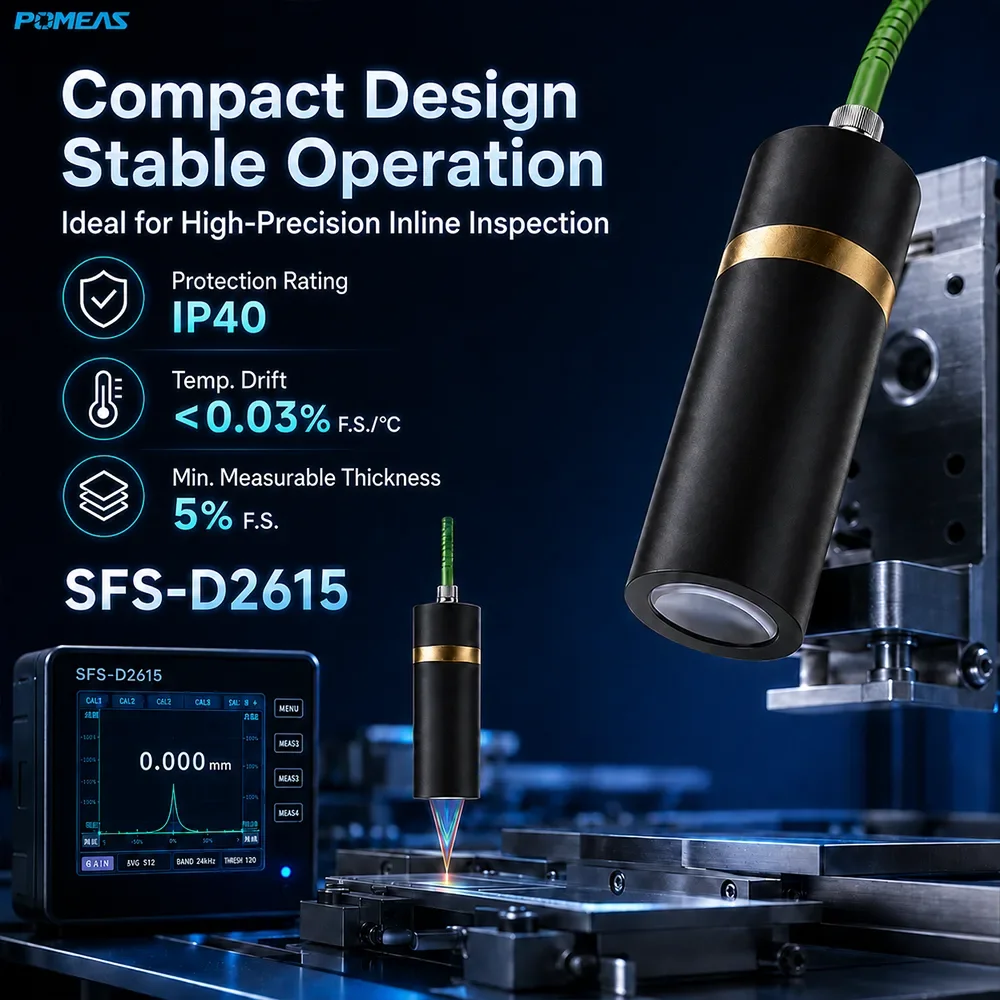
- Minimum measurable thickness 5% F.S., supports transparent materials
- Temperature drift <0.03% F.S./°C, IP40
Technical Specifications
| Product Model | SFS-D2615 |
|---|---|
| Sensor Type | Chromatic Confocal Displacement Sensor |
| Reference Distance | 15 mm |
| Measuring Range | ±1.3 mm |
| Measuring Angle | ±31° |
| Spot Diameter | Φ9/18/144 μm |
| Repeatability | 50 nm |
| Linearity Error | <±0.26 μm |
| Probe Size | Φ36×97.9 mm |
| Weight | 228 g |
| Minimum Measurable Thickness | 5% of F.S. |
| Temperature Characteristic | <0.03% F.S./°C |
| Protection Rating | IP40 |
| Measurement Method | Non-contact Optical Measurement |
| Application | Displacement, Thickness, Height and Surface Contour Measurement |
Applications
Ideal for precision part displacement and height measurement, transparent glass and film thickness measurement, curved-surface step inspection and surface contour scanning.
FAQ
What is the precision of the SFS-D2615?
Repeatability is 50 nm and linearity error is <±0.26 μm (verified with a nanometer-grade laser interferometer), with a ±31° measuring angle.
What are the measuring range and reference distance?
Reference distance 15 mm, measuring range ±1.3 mm (2.6 mm total travel, centered on the range midpoint).
Can it measure transparent materials?
Yes. The confocal principle focuses on the upper and lower surfaces of transparent materials separately; the minimum measurable thickness is 5% F.S., suitable for glass and film.
Related Reading: Spectral Confocal Displacement Sensors | SFS-D1502 100nm Confocal Sensor | Confocal vs Laser Triangulation
- Application
- Displacement, Thickness, Height and Surface Contour Measurement
- Linearity Error
- <±0.26 μm
- Measurement Method
- Non-contact Optical Measurement
- Measuring Angle
- ±31°
- Measuring Range
- ±1.3 mm
- Minimum Measurable Thickness
- 5% of F.S.
- Probe Size
- Φ36×97.9 mm
- Product Model
- SFS-D2615
- Protection Rating
- IP40
- Reference Distance
- 15 mm
- Repeatability
- 50 nm
- Sensor Type
- Chromatic Confocal Displacement Sensor
- Spot Diameter
- Φ9/18/144 μm
- Temperature Characteristic
- <0.03% F.S./°C
- Weight
- 228 g

Subscribe to Our Newsletter
Simply enter your email to receive the latest news and insights from Pomeas. Stay connected with Pomeas and be the first to discover new innovations in optical excellence.



0 Files